Ember theme
Jev use case · Real-time agents

Read the state.
Make the move.

When a product needs a decision now, waiting for a long generated answer can break the experience. Jev opens a different design space: compact state, parallel questions and a bounded next action.

The Little Builder holding a game controller beside a maze with three paths and an arrow-shaped playing piece
Explore a responsive agent

Structured text state · Proposed applications, not a live game

THE DEMONSTRATION

Yes, TypeSafe showed Jev playing Doom.

TypeSafe’s launch demonstration used game state represented as text and structured data. The team described making ten queries per second. This shows a model participating in a responsive game loop; it does not establish direct visual gameplay, competitive performance or a guaranteed frame rate.

The provider also reports a 70–500 ms response range for System One requests, with evaluations generally run from the US West Coast. Network distance, input size and application work affect the complete loop. Read TypeSafe’s launch and demo qualifications.

For a product team, the useful question is which decisions can fit into the interaction budget. A game’s strategic action selector can update less often than its physics or rendering. A live interface can classify intent while ordinary code updates the display.

PARALLEL QUESTIONS IN PRACTICE
Same questions, fewer round trips

Seconds · lower is better · Linear scale from 0 to 3.00

One batched Jev request
0.27
13 sequential Jev requests
2.71

13 questions about one document, averaged over five runs. The baseline sums sequential calls; concurrent calls would narrow the latency difference.

Source: TypeSafe parallel-questions cookbook. Checked 18 September 2026. Provider-reported, not independently measured by QQuantum.ai.

Shared context reduces input cost

USD per briefing · lower is better · Linear scale from 0 to $0.007000

One batched Jev request
$0.000497
13 separate Jev requests
$0.006090

The same document is sent once in the batch and repeated in separate requests. This is a batching comparison within Jev, not a comparison with another model.

Source: TypeSafe parallel-questions cookbook. Checked 18 September 2026. Provider-reported, not independently measured by QQuantum.ai.

WHAT PARALLEL MEANS

Ask independent questions together.

A simulation can ask which permitted move fits the current goal, whether an obstacle blocks the route, and whether the state needs a fallback. These questions can use the same snapshot. Your code combines the outputs and discards checks that are irrelevant to the selected path.

If a question needs the result of an earlier action, it belongs in a later request. Parallel evaluation does not make sequential dependencies disappear. TypeSafe documents this distinction in its speculative fan-out pattern.

Keep the snapshot small and relevant. Persist memory in the application, pass the current facts explicitly, and reject a decision if its state version is already stale. These are proposed engineering controls for a responsive integration.

APPLICATIONS TO EXPLORE
PLAY

Game and simulation agents

Select from permitted moves using text state supplied by the game engine. Keep physics, collision rules and time-critical safety checks in deterministic code.
INTERACT

Responsive product interfaces

Classify a request, select a relevant help path or decide whether to ask a clarifying question. Measure the full interaction time from the user’s region.
SELECT

Agent skill selection

Choose an appropriate capability from an approved catalogue. TypeSafe’s skill-suggestion example ranks candidates, reads a shortlist in detail and can reject all options.

Application ideas, not shipped QQuantum.ai case studies. Source for skill selection: TypeSafe cookbook.

THE RESPONSE BUDGET

Measure the complete loop.

Instrument state collection, network transit, model response, validation and action execution separately. Track median and tail latency under realistic concurrency. Test timeouts, rate limits and stale responses before describing an experience as real-time.

An agent should have a safe default when a response arrives late: keep the previous permitted action, pause, or choose a deterministic fallback appropriate to the application. A low-latency average is not a hard real-time guarantee.

For camera or microphone input, another component must first produce text or structured observations. The current Jev model reference lists text-only inputs. Include that conversion in the latency, quality and cost budget.

QUESTIONS
QUESTIONS — 3

The current documented model accepts text, not images or video. TypeSafe’s Doom demonstration used structured game state. A visual pipeline would need a separate perception component.

No. It reproduces TypeSafe’s document-question experiment. It illustrates batching overhead, not gaming performance or a guaranteed response time.

A hosted model call does not provide a hard timing guarantee. Keep strict timing and safety constraints in deterministic systems and evaluate whether a model belongs in a slower decision layer.

Keep reading

How fast must
your agent decide?

Bring the interaction, available state and timing budget. We will identify a bounded decision loop and test it under realistic conditions.

CASE STUDIES

Shipped work.
Go and check it.

The work we can name, with the live site, our scope and the boundary made explicit. Select a project to see the evidence; each is a full case study, not a logo or a claim.

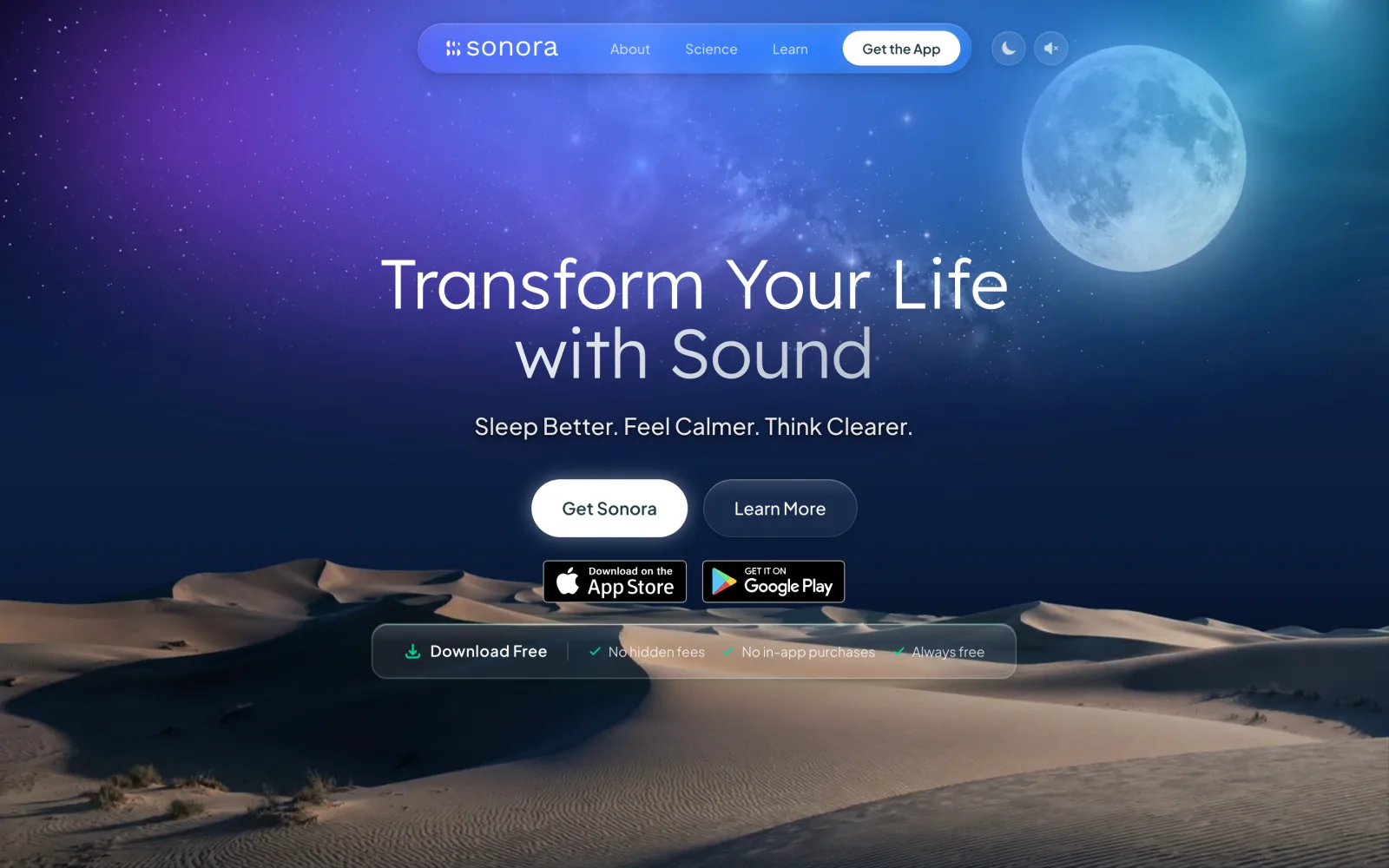
sonora.com
The Sonora homepage on desktop: a full-bleed dune landscape behind the headline “Transform Your Life with Sound”, with App Store and Google Play download buttons.
sonora.com — homepage, 1440×900 sonora.com →
Live Consumer wellness · Mobile + web

Sonora

Cognitive AI Ltd · 2026

A free sound-wellness app, described by its publisher as AI sound therapy that reads a short vocal sample at the start of a session and generates a soundscape for that moment. We designed and built the website and its backend, produced assets for the iOS and Android apps, and supported the application prototype.
Read the case study →

See every published project →

WHO WE HAVE BUILT FOR

Twenty-one years of applications, platforms and campaigns for names you know.

See all of our work →