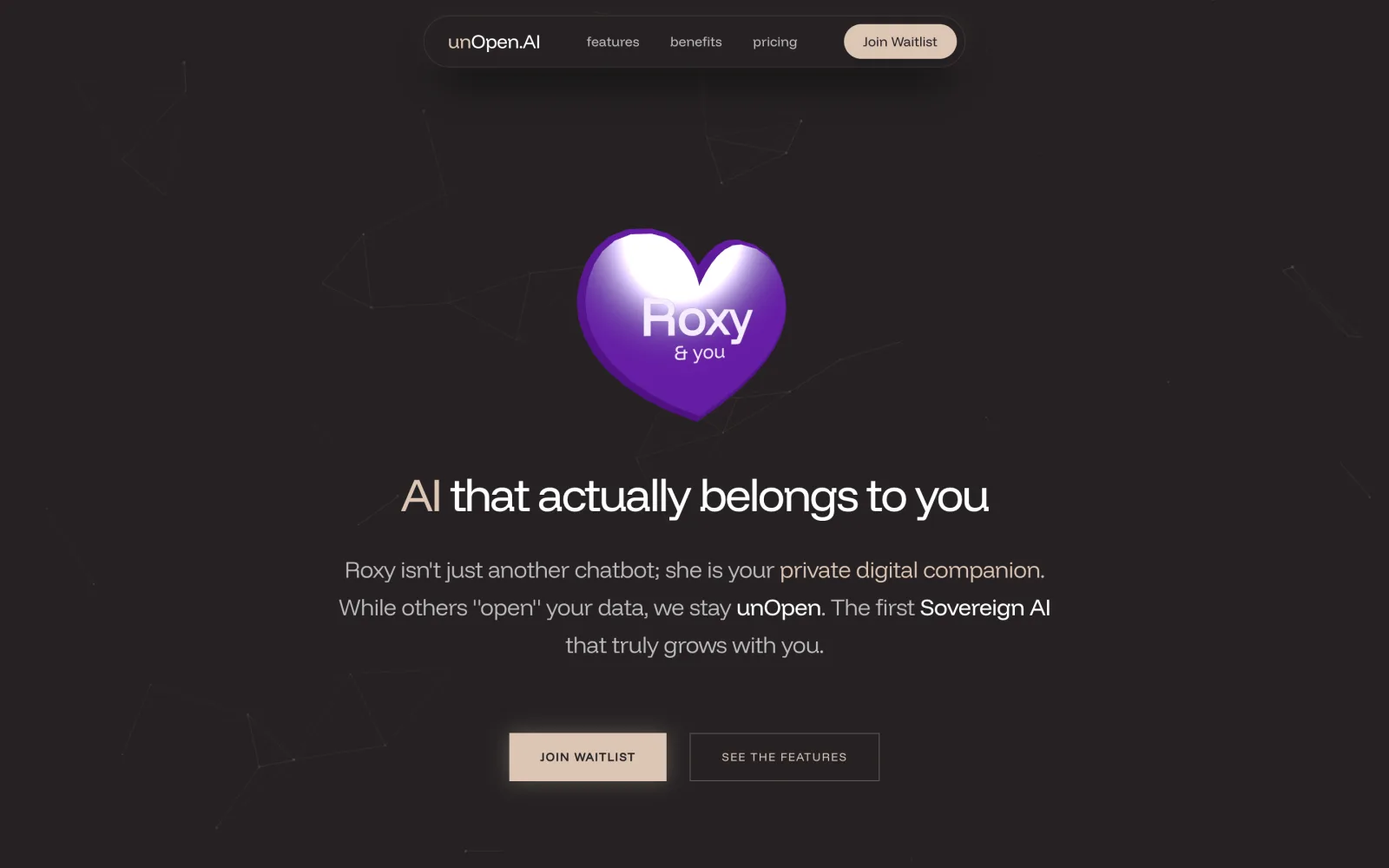
Roxy is a private AI assistant with permanent memory, on a dedicated deployment per user rather than a shared endpoint. We built it from nothing: the mark, the site, the product design, the backend, and the conversational work that makes Roxy feel like a person rather than a prompt box. Currently in closed beta with an open waitlist.
Standard assistants forget. You explain your business, your preferences and your constraints, get a good answer, close the tab — and the next morning you are a stranger again. The industry calls this a context window; users experience it as hiring someone new every day.
Roxy is built the other way round. Memory is the product, not a feature bolted on: a vector-backed long-term store that accumulates, plus retrieval that surfaces the right thing at the right moment rather than everything at once. It runs on a dedicated deployment per user; model calls go to the provider the user chooses under that provider's data terms, and we never use their data for training — because an assistant that knows everything about you is only acceptable if you hold the keys.
It also takes action — Google Workspace integration (in beta), mail, calendar, scripts — which is the line between an assistant and a chat window, and the line where the engineering gets serious.