Bottle theme
Technology

AI observability.
Silent failures.

A conventional service fails loudly: an exception, a status code, an alert. An AI system fails by returning a confident, well-formed, wrong answer with a 200 response. Conventional monitoring will not notice.

WHAT HAS TO BE RECORDED
01

The full trace

Not just the request and response — every retrieval, every tool call, every intermediate model call, in order, with timings. An agent that took nine steps produced its answer somewhere in those nine, and without the trace you are debugging by re-running and hoping.
02

Model and prompt version

Which model, which version, which prompt revision produced this output. Quality changes when either moves, and without this you cannot correlate a complaint with a deploy — which is the first question anyone asks.
03

Cost per unit of business meaning

Tokens per request is a technical number. Cost per resolved ticket, per document processed, per user per month is the number that decides whether the system survives a budget review. Attribute at that level from day one.
04

Retrieval quality signals

What was retrieved, what rank the used passage was at, whether anything was retrieved at all. Most quality regressions in a RAG system are retrieval regressions, and they are invisible if you log only the final answer.
DETECTING SILENT DECAY

Quality in a production AI system degrades without an event. The corpus grows and retrieval precision falls. Users start asking a new kind of question the system was never good at. A provider updates a model within a version. Each is gradual and none produces an error.

Three mechanisms catch it. A continuously running evaluation set — the same regression suite that gated the deploy, re-run on a schedule against production configuration, so a change in the model or the corpus shows up as a score movement. Input drift monitoring — tracking the distribution of incoming questions, so a shift toward unfamiliar territory is visible before the complaints arrive. And sampled human review, which remains the only method that catches failure modes nobody anticipated.

The last one is the one teams skip and the one that pays. A small number of outputs reviewed weekly by someone who knows what good looks like will find things no automated metric was built to detect, and it is how you discover the failure category you did not think to write a check for.

A PRACTICAL SETUP

We instrument with OpenTelemetry so traces land in whatever backend you already run, rather than introducing a separate observability product for the AI part of the system. Where a dedicated LLM tracing tool adds value it is for prompt and output inspection, and it should complement your existing stack rather than fork it.

Everything is sampled deliberately: full traces on errors and on a percentage of normal traffic, metadata on everything. Storing every full trace including prompts and outputs is expensive and, where those contain personal data, creates a retention obligation you may not want (check with your DPO). That is a decision to make consciously and to write down.

QUESTIONS
QUESTIONS — 3

For latency, errors and throughput, yes, and you should. What it will not give you is retrieval quality, output evaluation or cost attribution by business unit — those need instrumentation designed for them, which is why we treat it as an additional layer rather than a replacement.

Sampled rather than everything, and with a retention policy chosen deliberately. Prompts frequently contain personal or confidential data, which makes an unbounded log a liability. Metadata on everything, full payloads on a sample and on errors, is the balance we usually land on.

Only if you are measuring it continuously. There is no signal in the infrastructure — the system returns a 200 either way. A scheduled evaluation run against production configuration is the most reliable automated mechanism for catching it, and sampled human review is what catches the rest.

Keep reading
30-minute technical call · no deck

You cannot fix
what you cannot see.

Instrumentation is cheap on day one and archaeological later. We build it in.

CASE STUDIES

Shipped work.
Go and check it.

The work we can name, with the live site, our scope and the boundary made explicit. Select a project to see the evidence; each is a full case study, not a logo or a claim.

sonora.com
The Sonora homepage on desktop: a full-bleed dune landscape behind the headline “Transform Your Life with Sound”, with App Store and Google Play download buttons.
sonora.com — homepage, 1440×900 sonora.com →
Live Consumer wellness · Mobile + web

Sonora

Cognitive AI Ltd · 2026

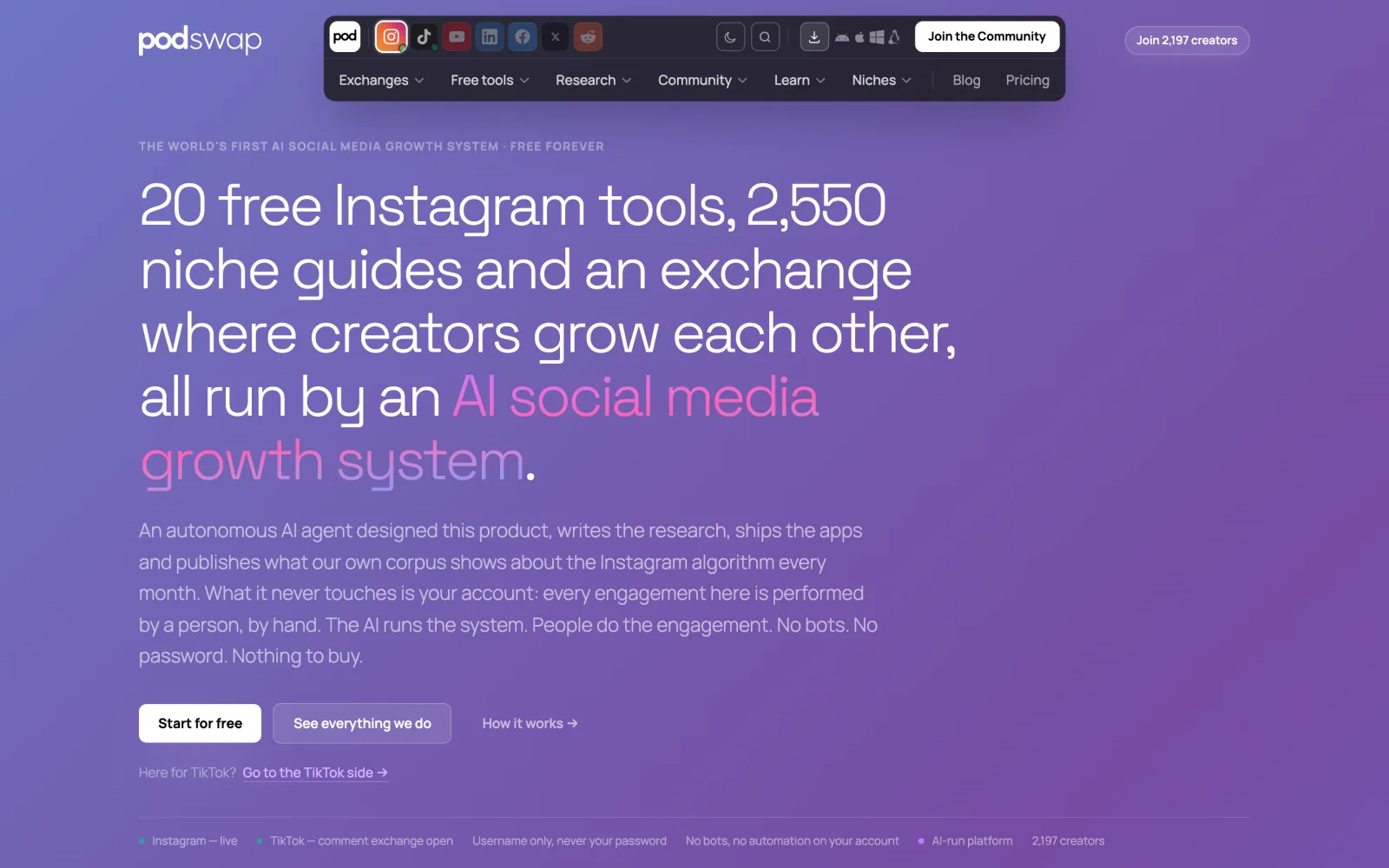
A free sound-wellness app, described by its publisher as AI sound therapy that reads a short vocal sample at the start of a session and generates a soundscape for that moment. We designed and built the website and its backend, produced assets for the iOS and Android apps, and supported the application prototype.

Read the case study →

See every published project →

WHO WE HAVE BUILT FOR

Twenty-one years of applications, platforms and campaigns for names you know.

See all of our work →