Dark theme
WELCOME TO QQUANTUM

Let Qubi show you around.

Choose how you’d like to explore.

Don’t agreeGo to yourOS instead ↗

Both choices allow Google Analytics, so we can see which pages help.

Sound is your choice. Essential cookies keep the site working. Continuing either way also allows Google Analytics (visits and pages viewed).

Read our Terms, Privacy and Cookies.

Change your choices anytime from the footer.

Getting Qubi ready.
Live · 2026 · Consumer wellness · Mobile + web

Sonora A sound-wellness app, free and ad-free.

Website, backend and app assets.

  • Cognitive AI Ltd
  • 2026
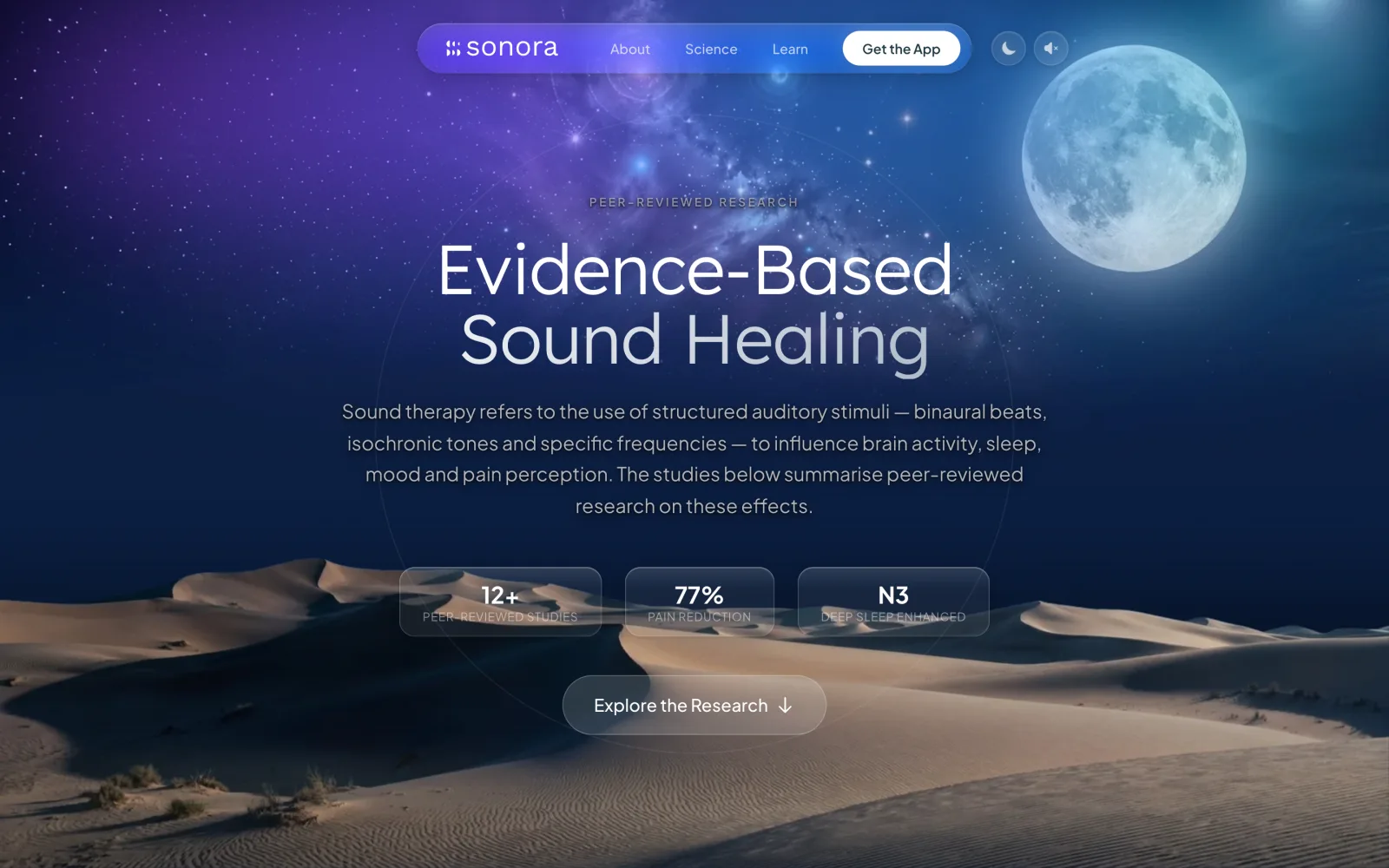
The Sonora homepage on desktop: a full-bleed dune landscape behind the headline “Transform Your Life with Sound”, with App Store and Google Play download buttons.
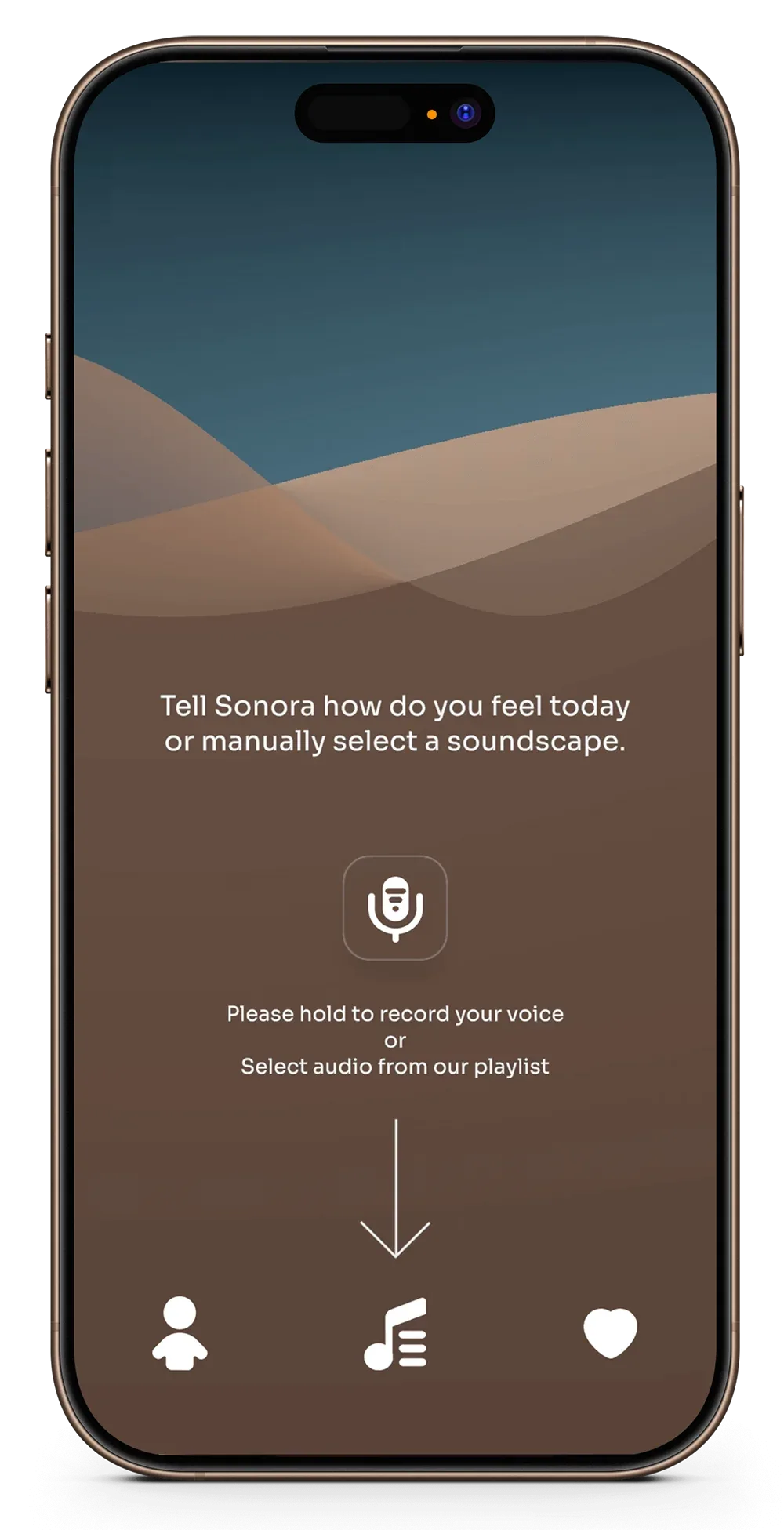
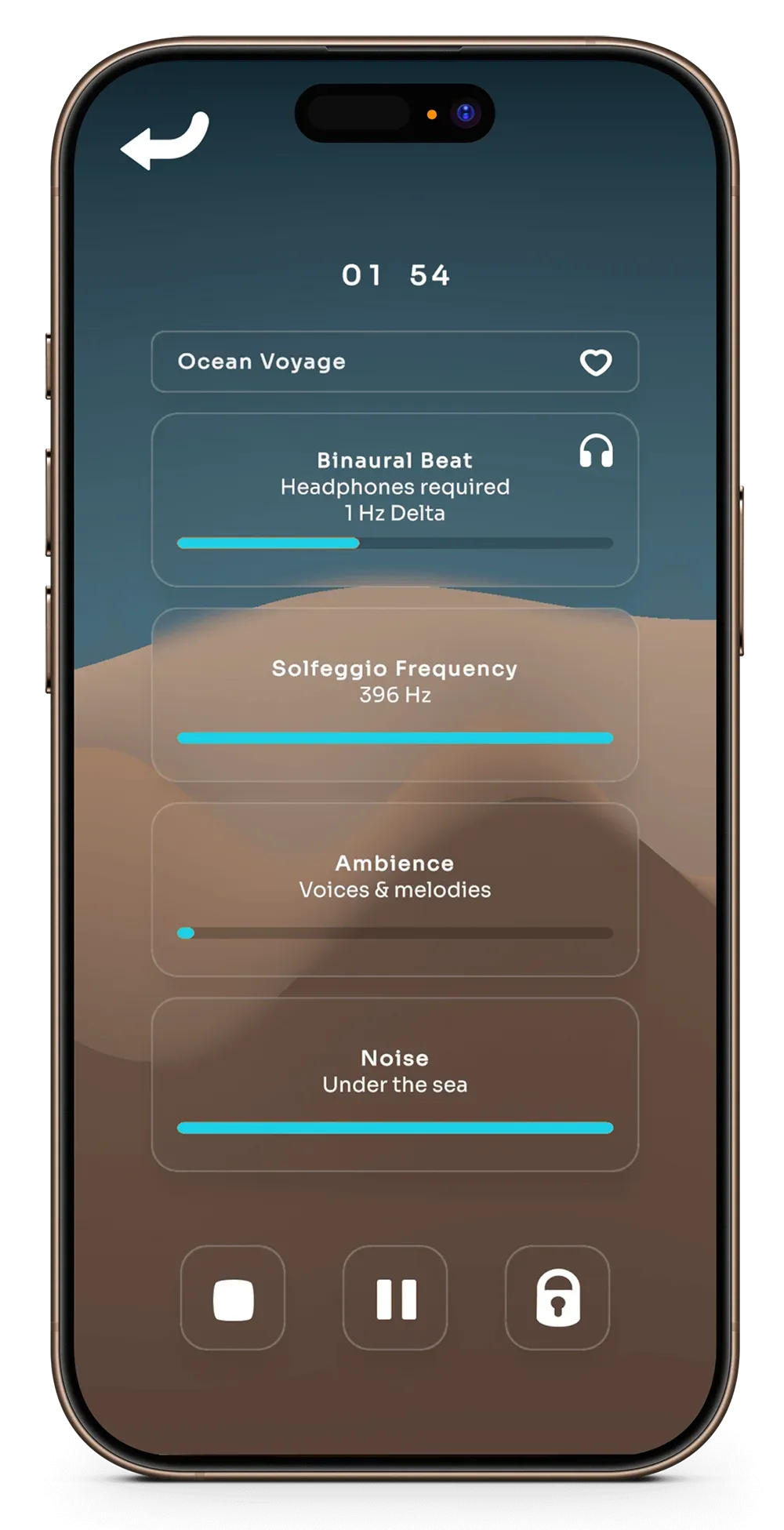
Sonora app screen: the session interface.
WHAT IT IS

The app listens first, then generates the sound.

A free sound-wellness app, described by its publisher as AI sound therapy that reads a short vocal sample at the start of a session and generates a soundscape for that moment. We designed and built the website and its backend, produced assets for the iOS and Android apps, and supported the application prototype.

Sonora describes itself as AI sound therapy: by its publisher's account, the app reads a short vocal sample at the start of a session and uses it to calibrate what it plays, generating a soundscape of binaural beats, Solfeggio frequencies and nature recordings for that person in that moment rather than picking from a library of pre-rendered tracks. Those are the publisher’s claims about the product, not ours; we built the website around it.

It ships free on iOS and Android with no subscription, no premium tier and no advertising, in a category where much of the competition is paid. That is a product decision with consequences for the build: there is no paywall to hide behind, so the first session has to be good and the site has to convert on the strength of the idea alone.

Sonora is published by Cognitive AI Ltd, part of the Coherence group.

Client
Cognitive AI Ltd
Live
2026
Sector
Consumer wellness · Mobile + web
Platforms
Web · iOS · Android
THE CONSTRAINTS THAT SHAPED IT

Four constraints, decided before anyone opened an editor.

Four things about this project decided most of the engineering. They are worth stating because they explain the choices that follow: a build like this is mostly the consequence of its constraints.

  • 01

    No paywall to hide behind

    The app is free, with no subscription, no premium tier and no advertising. There is no trial funnel and no upsell to carry a weak first impression, so the site has to do the persuading on its own. That pushes effort towards clarity and speed rather than towards conversion machinery.

  • 02

    The audience arrives on a phone

    A wellness app is found on a phone, frequently on a cellular connection, often at the end of the day. A heavy page is not a slow page here — it is an abandoned one. Performance stopped being a quality metric and became the primary design constraint.

  • 03

    The product claims belong to the publisher

    Sonora’s account of what the app does — the vocal sample, the generated soundscape — is theirs, and we had no basis on which to assert it independently. So the site presents the product in the publisher’s voice and our pages describe it as their claim. That is a writing constraint with a real effect on the copy.

  • 04

    One design system, three destinations

    The same visual language had to work on the marketing site, in the iOS App Store and on Google Play, each with its own dimensions and review rules. Producing those separately is how brands drift, so they came out of one system.

WHAT WE BUILT

Five things we built, and the one we did not.

  1. The website, designed and built from scratch

    Art direction, layout and front-end build across the marketing site, the science and learn sections, and the press kit. No template, no page builder.

    We built it
  2. The website backend

    Laravel application behind the site — content, the press kit, forms and the deployment pipeline.

    We built it
  3. Performance and technical SEO

    Bundling, image formats, font strategy and markup built for Core Web Vitals rather than retrofitted afterwards. The measured figures on this page are the result.

    We built it
  4. iOS and Android app assets

    Store and in-app visual assets produced for both platforms from a single design system.

    We built it
  5. Prototype support

    We worked with the client on the application prototype ahead of the production build.

    We built it
  6. What we did not build

    The vocal-biomarker analysis and the audio generation engine are Cognitive AI's own work, as is the app itself. We built the website, its backend and the app's visual assets, and supported the prototype.

    Not ours
THE DECISIONS THAT MATTERED

Three choices, and what they cost.

01

No front-end framework.

The site is server-rendered with progressive enhancement, and the JavaScript that ships is the small amount that genuinely needs to run in the browser. The measured figure below — a couple of kilobytes — is not a target we set and then celebrated; it is what is left when you decline to send a framework to a phone. The cost is real: interactions that a framework gives you free were written by hand, and a team used to component state would find the codebase unfamiliar. On a marketing site with a handful of interactive moments, that trade came out clearly in favour of the visitor.

02

Performance designed in, not tuned afterwards.

Image formats, font strategy, bundling and markup were decided at the start rather than retrofitted once a score came back red. The honest caveat is on the page: our own measurement puts modern image formats at four fifths of the images rather than all of them, and that remaining fifth is a known gap rather than a rounding error.

03

An application backend for a site that could have been static.

The site sits on Laravel because the press kit, the content and the forms all need somewhere to live and someone non-technical needs to change them without a deploy. A static generator would have been faster to stand up and worse to live with a year later. We do not sell a house stack — this was the right answer here and would not be on every project.

STACK

What it is built with.

Application
Laravel PHP 8.4 Blade
Front end
Vite Modern ES modules Progressive enhancement
Assets & delivery
WebP imagery SVG logos and icons LiteSpeed HTTP/2

Chosen for this project. We are not a Laravel-only studio and do not sell a house stack.

MEASURED

Measured performance, with the method.

JavaScript shipped
2.4KB
CSS shipped
17KB
HTML document
20KB
Time to first byte
599ms
Images in modern formats
80%

Measured on 7 September 2026. Taken from a cold request with Accept-Encoding pinned to gzip. Transfer sizes are compressed bytes over the wire, first-party assets only. Figures move a little with compression negotiation and network conditions. Run the commands to check them — the numbers should land close to these.

curl -sS -o /dev/null -H 'Accept-Encoding: gzip' -w 'TTFB %{time_starttransfer}s HTML %{size_download} bytes\n' https://sonora.com/ curl -sS -o /dev/null -H 'Accept-Encoding: gzip' -w 'JS %{size_download} bytes\n' https://sonora.com/build/assets/app-DRdBa2Y6.js
SCREENS

The live site, screen by screen.

The Sonora homepage on a mobile viewport, showing the same hero reflowed to a single column.
sonora.com — mobile, 390×844
The Sonora science page on desktop, presenting the research the product draws on.
sonora.com/science — 1440×900
On a phone
Sonora app screen: the session interface.
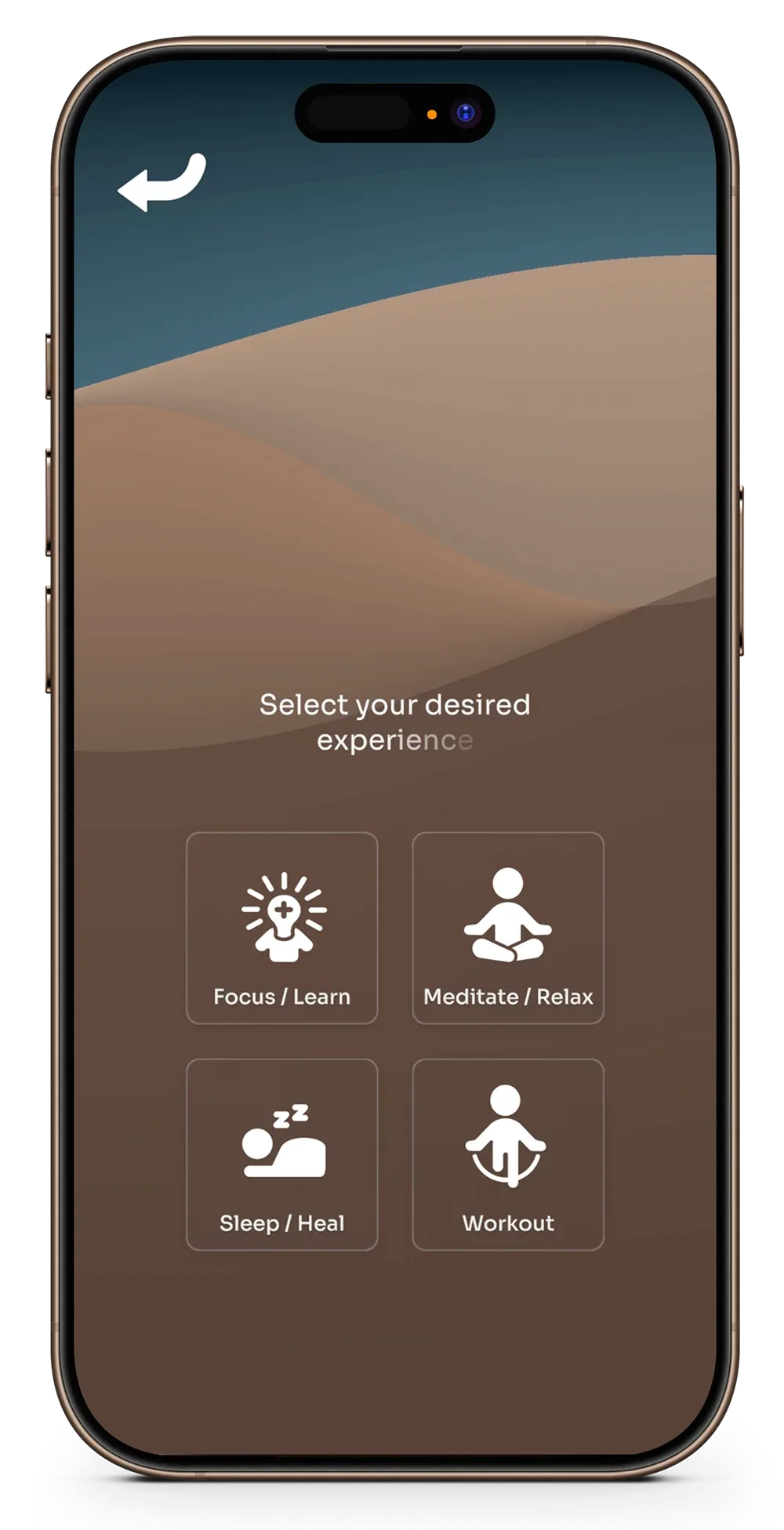
Sonora app screen: soundscape selection.
Sonora app screen: a session in progress.
Sonora app screen: the user’s journey view.

App screens published by Cognitive AI Ltd in their press kit and used with their permission. The app itself is theirs — we produced its visual assets and supported the prototype.

Questions

Questions about this build.

Did you build the AI?

No. The vocal-biomarker analysis and the audio generation engine are Cognitive AI’s own work, and so is the app. We built the website and its backend, produced the visual assets for the iOS and Android apps, and supported the application prototype. We are specific about this because a portfolio that implies you built the whole product is worth nothing the moment someone checks.

How was the performance achieved?

By deciding it up front rather than optimising afterwards. Images are WebP, logos and store badges are SVG, the JavaScript is bundled through Vite and kept deliberately small, and the markup is server-rendered so the first paint does not wait on a framework. The figures on this page are what that produces — you can re-run the measurement yourself with the command in the method note.

Can we see the code?

The repository belongs to the client, so no. What you can do is read the page source of sonora.com, which is the honest version of the same question: bundle sizes, markup structure and asset strategy are all visible from the outside.

Do you only build in Laravel?

No. Laravel suited this project — a content-driven marketing site with a backend, a press kit and forms, shipped quickly by a small team. We pick per project and we do not sell a house stack.

Can we talk to the client?

Ask us on a call. Whether a reference is available is the client’s decision rather than ours, and we will not promise one on their behalf.

Hire your first
AI employee.

Tell us the job you would hand over if you trusted a machine with it. In one 30-minute call we will tell you whether it should, what it would take — and if it should not, we will say so.

30-minute technical call · no deck
Shipped & in build

Real work. Check it yourself.

What we built, what stage it is at, and a link to the live thing wherever there is one.

The updated yourOS homepage: Roxy’s open ring surrounded by bento cards for calls, voice, translation, building, design, apps and more.
The yourOS homepage on a phone, with its compact navigation, welcome film button and bento cards.
youros.tech — the homepage bento hero
Our own · coming soon

yourOS

yourOS is an operating system with an AI at its heart. You talk to it like a person, out loud or typed. It makes your calls, plans your days and works on your projects with a crew of agents, on your own private server. Our own product, built from the first commit; the waitlist is open.

What we built
  • Operating system
  • Roxy
  • Agent crew
  • Voice calls
  • App store
  • Website
Meet yourOS →
The Sonora homepage on desktop: a full-bleed dune landscape behind the headline “Transform Your Life with Sound”, with App Store and Google Play download buttons.
The Sonora homepage on a mobile viewport, showing the same hero reflowed to a single column.
sonora.com — homepage, 1440×900
Live · iOS · Android

Sonora

Website, backend and app assets for Sonora, a free AI sound-therapy app on iOS and Android published by Cognitive AI.

What we built
  • Website
  • Backend
  • App assets
Read the case study →
The updated Podswap homepage on desktop: “Grow on Instagram and TikTok for free, with real engagement from creators your size”, beside a tilted wall of exchange, tool and guide cards on a violet gradient.
The updated Podswap homepage on a phone, with its floating navigation, Instagram and TikTok engagement headline and tilted tool cards.
podswap.app — homepage, 1440×900
Five platforms

Podswap

Brand, website, prototype, apps on five platforms, the AI backend and the algorithm-intelligence pipeline for Podswap, a social growth engine that runs without a human in the loop.

What we built
  • Brand
  • Website
  • Prototype
  • Apps on five platforms
  • AI backend
  • Algorithm pipeline
Read the case study →
The unOpen.AI homepage introducing Roxy, a private AI assistant that remembers who you are.
The unOpen.AI homepage on a mobile viewport.
unopen.ai — homepage, 1440×900
Prototype · closed beta

unOpen.AI

In closed beta: Roxy, a private AI assistant with permanent memory running on infrastructure the user owns. Brand, site, product, backend and conversational design.

What we built
  • Brand
  • Site
  • Product
  • Backend
  • Conversational design
Read the case study →
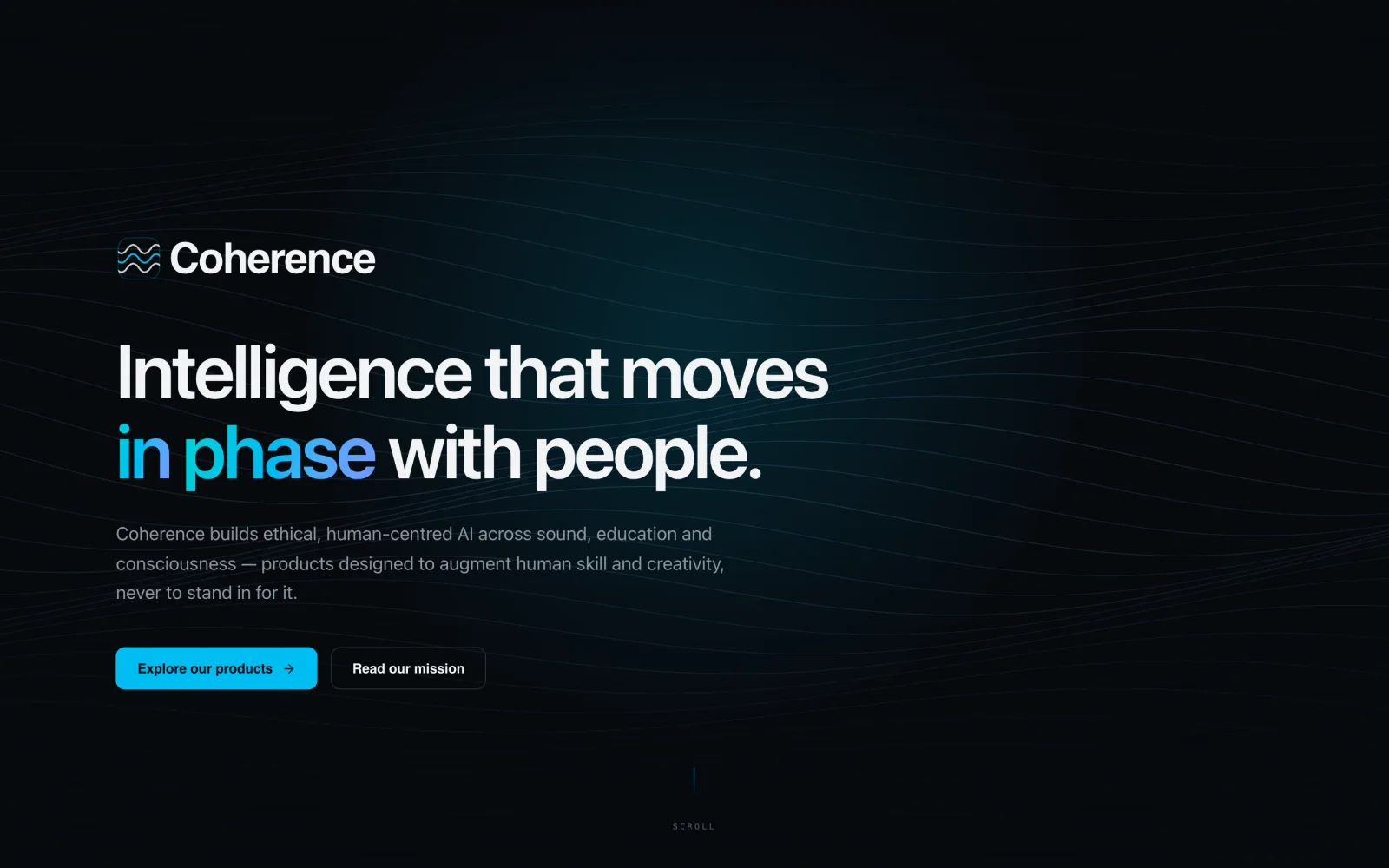
coherence.com on desktop, headed "Intelligence that moves in phase with people".
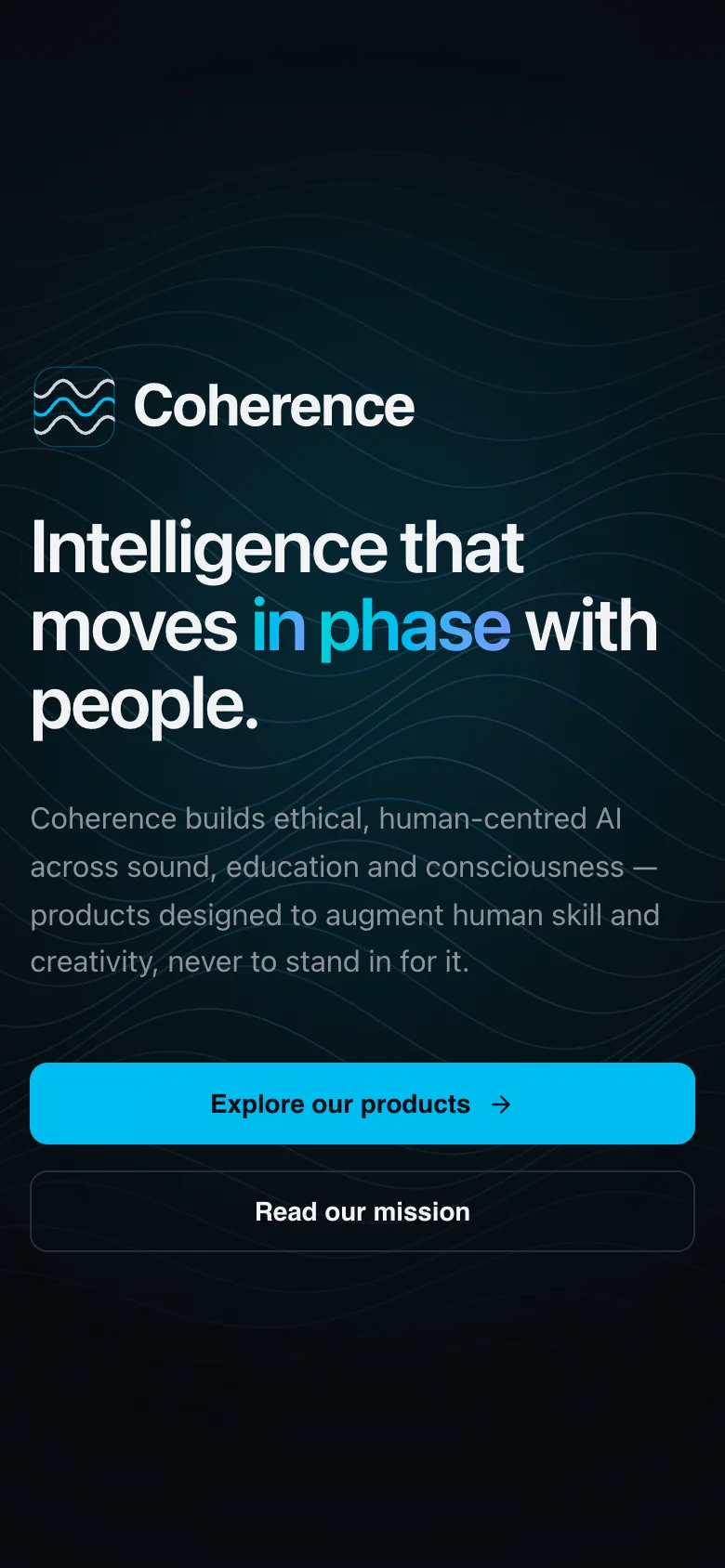
coherence.com on a mobile viewport, reflowed to a single column.
coherence.com — homepage, 1440×900
Live

Coherence

Live at coherence.com: brand identity generated with AI agents we directed, the motion system and website for the group behind Sonora, AboutAI, WakeUp and MudShadows. Agent work remains in build.

What we built
  • Brand identity
  • Motion system
  • Live website
  • Agent work — in build
Read the case study →
The new Domain Booth homepage on desktop: the headline “Premium Domains. Serious Buyers. Proven Results.” beside the animated DB monogram.
The new Domain Booth homepage on a phone, reflowed to a single column.
Our build of the Domain Booth homepage — 1440×900
Live

Domain Booth

Live at domainbooth.com for DomainBooth, a premium domain brokerage: a new animated mark, every page redesigned and rebuilt with designed mobile layouts, and a custom CMS for its sales record, featured names, press and enquiries.

What we built
  • Animated mark
  • Every page redesigned
  • Designed mobile layouts
  • Custom CMS
Read the case study →
Who we have built for

Twenty-one years. Names you know.

Apps, platforms and campaigns for these teams, long before the AI work. Every one is written up on the work page — what we did, and where our part ended.

See all of our work →
  • BBC Good Food logo
  • Charities Aid Foundation logo
  • GAME logo
  • NatWest logo
  • Next logo
  • NSPCC logo
  • Tesco logo
  • Worldpay logo
  • Samsung logo
  • Sony logo
  • Land Rover logo
  • UAP Limited logo
  • Netflix logo
  • Amazon Prime Video logo
  • Mercedes-Benz dealerships logo
  • San Miguel logo
  • Biovene Barcelona logo
  • Seventy7 logo
  • Littlewoods logo
  • Smile logo
  • The Co-operative Bank logo