Dark theme
WELCOME TO QQUANTUM

Let Qubi show you around.

Choose how you’d like to explore.

Don’t agreeGo to yourOS instead ↗

Both choices allow Google Analytics, so we can see which pages help.

Sound is your choice. Essential cookies keep the site working. Continuing either way also allows Google Analytics (visits and pages viewed).

Read our Terms, Privacy and Cookies.

Change your choices anytime from the footer.

Getting Qubi ready.
SaaS

Churn and expansion.
Beyond a score.

Churn models are among the most commonly built and least commonly used pieces of machine learning in SaaS. The model is rarely the problem. The problem is that a ranked list of at-risk accounts arrives with no instruction attached.

All SaaS & Technology →
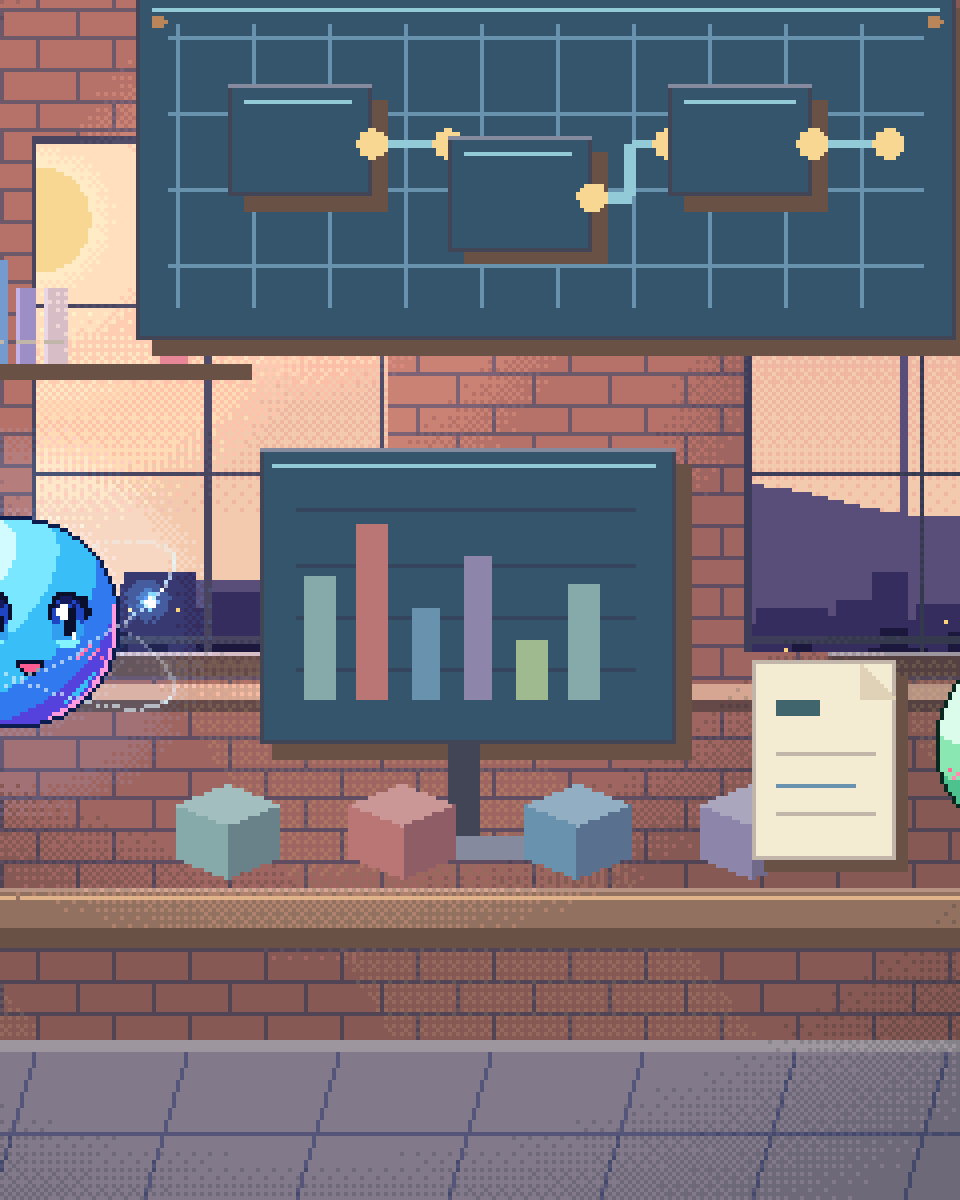
Pixel illustration for Churn & Expansion: groups of product tiles inspected across a timeline.

Why these projects stall

A customer success manager receives a list of accounts with risk scores. They already suspected most of them. For the ones they did not, the score does not say what changed, why it matters, or what to do — so the list is read once and then ignored, and six months later someone concludes that churn prediction does not work here.

What makes the difference is not accuracy but actionability. The output has to be a specific observation with a specific suggested action: this account's weekly active users dropped forty per cent after their admin left in March, three integrations have gone stale, and the renewal is in ninety days. That is something a person can act on this afternoon.

Assembling that narrative from telemetry, support history, billing and CRM notes is exactly where a language model contributes, sitting on top of a classical model that does the actual prediction. The division of labour is the same one that recurs across this site: statistics for the number, language for the explanation.

The signals that actually predict

01

Depth, not logins

Whether the features that create the value the customer bought are being used, by how many people, and whether that is growing. Login counts are a weak proxy that survives in dashboards mainly because they are easy to compute.
02

Champion departure

One of the strongest predictors in most B2B products, and one that is usually visible in your own data — the admin account that stopped being used, the email that started bouncing. Detectable weeks before it becomes a renewal problem.
03

Support sentiment trajectory

Not ticket volume, which is ambiguous, but the direction of tone across a relationship. Language models are genuinely good at this and it is hard to compute any other way.
04

Expansion signals, symmetrically

The same telemetry that predicts churn predicts growth: a team hitting a plan limit, a new department appearing, usage patterns matching accounts that later upgraded. The expansion side is usually the larger commercial opportunity and is built second, if at all.

Measuring it honestly

Churn model evaluation is unusually easy to get wrong, and two mistakes account for most of it. The first is leakage: a feature that only exists because the account was already churning — a cancellation-related support ticket, a billing status change — makes the model look excellent in backtest and useless in production. Every feature needs checking against a strict as-of date.

The second is judging the model on prediction accuracy rather than on retained revenue. The model exists to enable an intervention, so the question is whether accounts flagged and worked retain better than comparable accounts that were not. That needs a holdout — some flagged accounts deliberately not worked — which is uncomfortable to propose and is the only way to know whether any of this is working.

From score to action

ACCOUNT SIGNAL PATH
  1. 01
    Product telemetry

    depth of use, not logins

  2. 02
    Risk model

    classical, leakage-checked

  3. 03
    Assemble narrative

    what changed, and when

  4. 04
    Specific action

    in the CRM, not a dashboard

  5. 05
    CSM acts

    or records why not

  6. 06 · Branch / escalation
    Holdout

    some flagged accounts unworked

Solid: the signal pathDashed: the holdout that proves the intervention works
The narrative is what makes the score actionable. The holdout is what makes the whole thing measurable.
Questions

Questions about Churn & Expansion.

How much data do we need?

Enough churn events to learn from, which for a low-churn enterprise product can mean years of history and a small number of positives. Where that is the case we would say so and suggest starting with rule-based signals plus narrative assembly, which delivers most of the practical value without pretending to a model the data cannot support.

Will customer success actually use it?

Only if it arrives where they already work and tells them something they did not know, with a specific action. We build it into the CRM rather than as a dashboard, because a separate dashboard is a thing people visit twice.

Can it write the outreach?

It can draft it from the specific observation, which saves time and improves relevance. It should not send it — a poorly judged automated message to an at-risk account can be the thing that finishes the relationship.

Ship the action,
not the score.

A ranked list changes nothing. A specific observation with a suggested next step changes a renewal.

30-minute technical call · no deck

Shipped & in build

Real work. Check it yourself.

What we built, what stage it is at, and a link to the live thing wherever there is one.

The updated yourOS homepage: Roxy’s open ring surrounded by bento cards for calls, voice, translation, building, design, apps and more.
The yourOS homepage on a phone, with its compact navigation, welcome film button and bento cards.
youros.tech — the homepage bento hero
Our own · coming soon

yourOS

yourOS is an operating system with an AI at its heart. You talk to it like a person, out loud or typed. It makes your calls, plans your days and works on your projects with a crew of agents, on your own private server. Our own product, built from the first commit; the waitlist is open.


What we built
  • Operating system
  • Roxy
  • Agent crew
  • Voice calls
  • App store
  • Website
Meet yourOS →
The Sonora homepage on desktop: a full-bleed dune landscape behind the headline “Transform Your Life with Sound”, with App Store and Google Play download buttons.
The Sonora homepage on a mobile viewport, showing the same hero reflowed to a single column.
sonora.com — homepage, 1440×900
Live · iOS · Android

Sonora

Website, backend and app assets for Sonora, a free AI sound-therapy app on iOS and Android published by Cognitive AI.

What we built
  • Website
  • Backend
  • App assets
Read the case study →
The updated Podswap homepage on desktop: “Grow on Instagram and TikTok for free, with real engagement from creators your size”, beside a tilted wall of exchange, tool and guide cards on a violet gradient.
The updated Podswap homepage on a phone, with its floating navigation, Instagram and TikTok engagement headline and tilted tool cards.
podswap.app — homepage, 1440×900
Five platforms

Podswap

Brand, website, prototype, apps on five platforms, the AI backend and the algorithm-intelligence pipeline for Podswap, a social growth engine that runs without a human in the loop.

What we built
  • Brand
  • Website
  • Prototype
  • Apps on five platforms
  • AI backend
  • Algorithm pipeline
Read the case study →
The unOpen.AI homepage introducing Roxy, a private AI assistant that remembers who you are.
The unOpen.AI homepage on a mobile viewport.
unopen.ai — homepage, 1440×900
Prototype · closed beta

unOpen.AI

In closed beta: Roxy, a private AI assistant with permanent memory running on infrastructure the user owns. Brand, site, product, backend and conversational design.

What we built
  • Brand
  • Site
  • Product
  • Backend
  • Conversational design
Read the case study →
coherence.com on desktop, headed "Intelligence that moves in phase with people".
coherence.com on a mobile viewport, reflowed to a single column.
coherence.com — homepage, 1440×900
Live

Coherence

Live at coherence.com: brand identity generated with AI agents we directed, the motion system and website for the group behind Sonora, AboutAI, WakeUp and MudShadows. Agent work remains in build.

What we built
  • Brand identity
  • Motion system
  • Live website
  • Agent work — in build
Read the case study →
The new Domain Booth homepage on desktop: the headline “Premium Domains. Serious Buyers. Proven Results.” beside the animated DB monogram.
The new Domain Booth homepage on a phone, reflowed to a single column.
Our build of the Domain Booth homepage — 1440×900
Live

Domain Booth

Live at domainbooth.com for DomainBooth, a premium domain brokerage: a new animated mark, every page redesigned and rebuilt with designed mobile layouts, and a custom CMS for its sales record, featured names, press and enquiries.

What we built
  • Animated mark
  • Every page redesigned
  • Designed mobile layouts
  • Custom CMS
Read the case study →
Who we have built for

Twenty-one years. Names you know.

Apps, platforms and campaigns for these teams, long before the AI work. Every one is written up on the work page — what we did, and where our part ended.

See all of our work →
  • BBC Good Food logo
  • Charities Aid Foundation logo
  • GAME logo
  • NatWest logo
  • Next logo
  • NSPCC logo
  • Tesco logo
  • Worldpay logo
  • Samsung logo
  • Sony logo
  • Land Rover logo
  • UAP Limited logo
  • Netflix logo
  • Amazon Prime Video logo
  • Mercedes-Benz dealerships logo
  • San Miguel logo
  • Biovene Barcelona logo
  • Seventy7 logo
  • Littlewoods logo
  • Smile logo
  • The Co-operative Bank logo





















