Dark theme
WELCOME TO QQUANTUM

Let Qubi show you around.

Choose how you’d like to explore.

Don’t agreeGo to yourOS instead ↗

Both choices allow Google Analytics, so we can see which pages help.

Sound is your choice. Essential cookies keep the site working. Continuing either way also allows Google Analytics (visits and pages viewed).

Read our Terms, Privacy and Cookies.

Change your choices anytime from the footer.

Getting Qubi ready.
Legal

eDiscovery.
Defensible at volume.

eDiscovery has used machine learning for well over a decade, and the courts that accept it accept a documented, statistically validated process rather than a clever model. Anything new has to fit that frame or it cannot be used.

Last reviewed 4 September 2026 · Engineering guidance, not legal advice.
All Legal & Compliance →
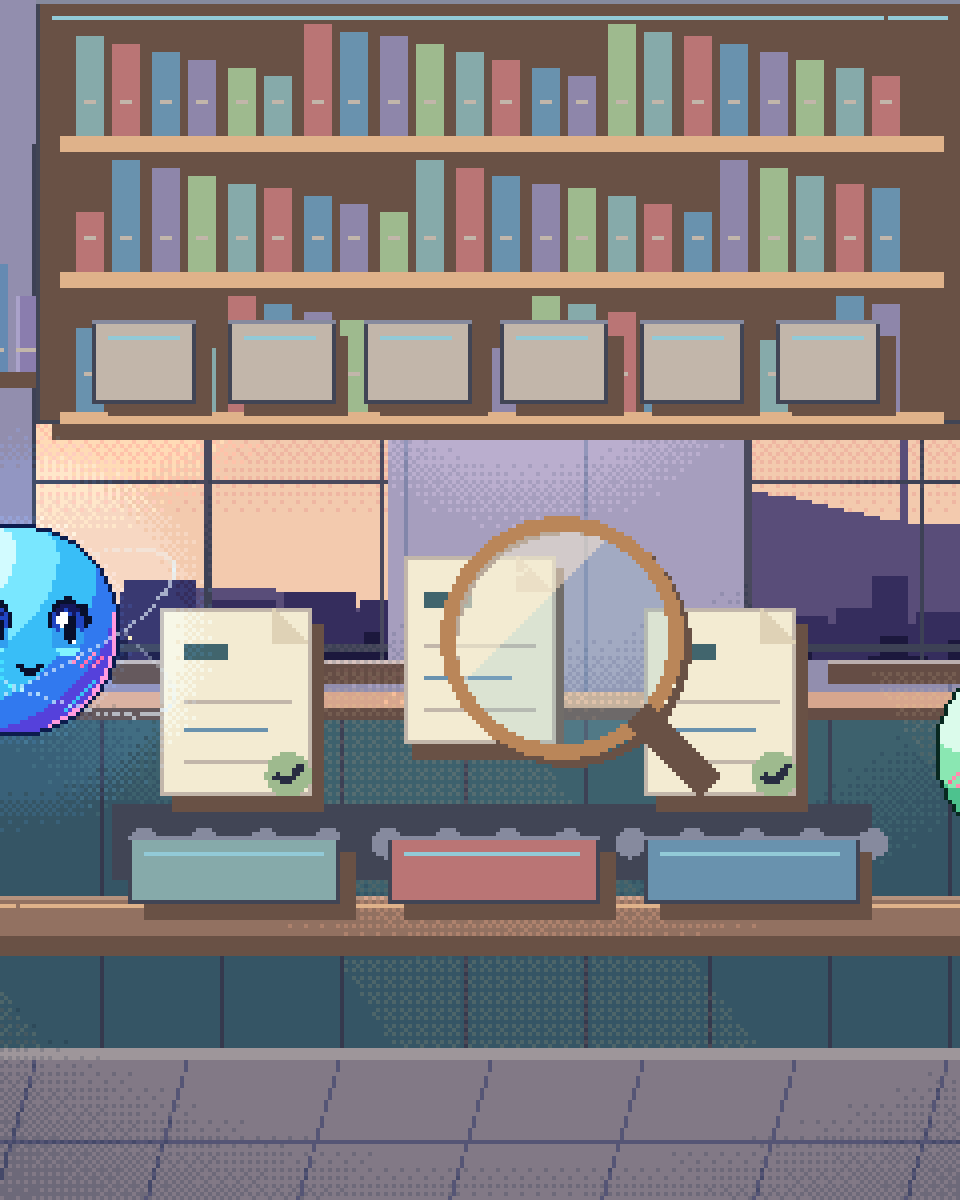
Pixel illustration for eDiscovery: an archive drawer of evidence cards with source links.

What is actually different now

Technology-assisted review is established practice. What language models add is not a replacement for it but two capabilities the older approaches lacked: the ability to work from a description of what is responsive rather than only from labelled examples, and the ability to explain why a document was classified as it was in terms a reviewer can evaluate.

The first shortens the cold start. A traditional workflow needs a seed set built by senior reviewers before the classifier is useful. A model that can be given the issues in the matter, in prose, produces a usable first pass immediately — and the seed set then refines rather than bootstraps it.

The second matters more for defensibility. A reviewer disagreeing with a classification can see the reasoning and the passages it rested on, which surfaces systematic misunderstandings early — a whole category of document being misread because of an ambiguous term of art, for instance — instead of after a full pass.

What does not change

01

Statistical validation

Recall and precision estimated on a properly drawn random sample, with confidence intervals, documented before production. This is the evidence that the process was reasonable, and no model quality claim substitutes for it.
02

A documented protocol

Agreed with the other side where required, and followed. Changing the approach mid-review without documenting it is the thing that gets a process challenged, regardless of the technology involved.
03

Privilege review stays human

An inadvertent privilege waiver is not a recoverable error. Models can prioritise and flag candidates; the determination stays with a lawyer, every time.
04

Reproducibility

Model version, prompt, parameters and the classification of every document recorded. If the process is challenged in eighteen months, you must be able to reconstruct exactly what happened.

The confidentiality point

A discovery corpus is the most sensitive collection of documents an organisation will ever assemble in one place: internal communications, draft strategy, privileged material and personal data belonging to people who are not parties. Sending that corpus to a third-party API is a decision that deserves far more scrutiny than it usually receives, and in several jurisdictions it raises data protection questions of its own.

Self-hosted open-weight models generally handle classification and prioritisation of this kind comfortably. Running the review inside a perimeter you control removes the transfer question entirely and makes the arrangement far easier to explain to a court, a client and a data protection authority.

How the process stays defensible

REVIEW PROTOCOL
  1. 01
    Collection

    inside your perimeter

  2. 02
    Seed and describe

    issues stated in prose

  3. 03
    Classify

    with reasoning recorded

  4. 04
    Validate

    random sample, stated intervals

  5. 05
    Document

    protocol, version, parameters

  6. 06 · Branch / escalation
    Privilege

    determined by a lawyer, always

Solid: the validated review pathDashed: the determination that never leaves a lawyer
What a court accepts is a documented, statistically validated process. The model is one component inside it, not a substitute for it.
Questions

Questions about eDiscovery.

Will a court accept this?

In the US and England, courts have accepted technology-assisted review for over a decade where the process was documented and statistically validated. The technology is not what is accepted or rejected — the process is. Whether a given protocol will be accepted in your forum is a question for counsel, and many civil-law jurisdictions have no equivalent disclosure regime at all. Build the validation properly and this is a continuation of established practice rather than a novelty.

Can it handle privilege?

It can prioritise likely-privileged documents so lawyers see them first, which is genuinely useful. It cannot make the determination. The consequences of a false negative are severe and not undoable, and no accuracy figure justifies removing the human here.

What about multilingual corpora?

Handled better than by older approaches, which frequently needed separate models or translation per language. Validate per language rather than in aggregate — an overall recall figure can conceal a weak language entirely.

The process is
the deliverable.

Validation, documentation and reproducibility. The model is the easy part of an eDiscovery build.

30-minute technical call · no deck

Shipped & in build

Real work. Check it yourself.

What we built, what stage it is at, and a link to the live thing wherever there is one.

The updated yourOS homepage: Roxy’s open ring surrounded by bento cards for calls, voice, translation, building, design, apps and more.
The yourOS homepage on a phone, with its compact navigation, welcome film button and bento cards.
youros.tech — the homepage bento hero
Our own · coming soon

yourOS

yourOS is an operating system with an AI at its heart. You talk to it like a person, out loud or typed. It makes your calls, plans your days and works on your projects with a crew of agents, on your own private server. Our own product, built from the first commit; the waitlist is open.


What we built
  • Operating system
  • Roxy
  • Agent crew
  • Voice calls
  • App store
  • Website
Meet yourOS →
The Sonora homepage on desktop: a full-bleed dune landscape behind the headline “Transform Your Life with Sound”, with App Store and Google Play download buttons.
The Sonora homepage on a mobile viewport, showing the same hero reflowed to a single column.
sonora.com — homepage, 1440×900
Live · iOS · Android

Sonora

Website, backend and app assets for Sonora, a free AI sound-therapy app on iOS and Android published by Cognitive AI.

What we built
  • Website
  • Backend
  • App assets
Read the case study →
The updated Podswap homepage on desktop: “Grow on Instagram and TikTok for free, with real engagement from creators your size”, beside a tilted wall of exchange, tool and guide cards on a violet gradient.
The updated Podswap homepage on a phone, with its floating navigation, Instagram and TikTok engagement headline and tilted tool cards.
podswap.app — homepage, 1440×900
Five platforms

Podswap

Brand, website, prototype, apps on five platforms, the AI backend and the algorithm-intelligence pipeline for Podswap, a social growth engine that runs without a human in the loop.

What we built
  • Brand
  • Website
  • Prototype
  • Apps on five platforms
  • AI backend
  • Algorithm pipeline
Read the case study →
The unOpen.AI homepage introducing Roxy, a private AI assistant that remembers who you are.
The unOpen.AI homepage on a mobile viewport.
unopen.ai — homepage, 1440×900
Prototype · closed beta

unOpen.AI

In closed beta: Roxy, a private AI assistant with permanent memory running on infrastructure the user owns. Brand, site, product, backend and conversational design.

What we built
  • Brand
  • Site
  • Product
  • Backend
  • Conversational design
Read the case study →
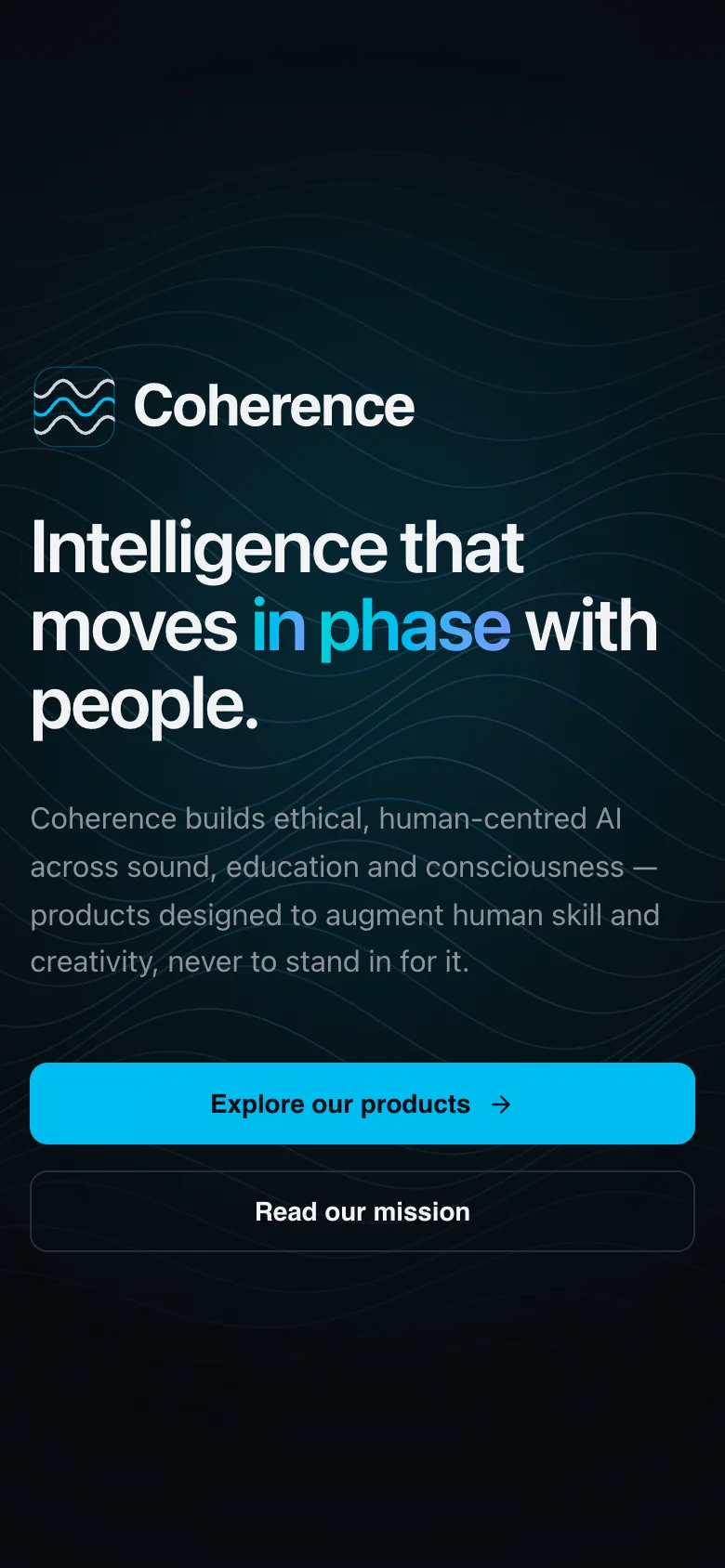
coherence.com on desktop, headed "Intelligence that moves in phase with people".
coherence.com on a mobile viewport, reflowed to a single column.
coherence.com — homepage, 1440×900
Live

Coherence

Live at coherence.com: brand identity generated with AI agents we directed, the motion system and website for the group behind Sonora, AboutAI, WakeUp and MudShadows. Agent work remains in build.

What we built
  • Brand identity
  • Motion system
  • Live website
  • Agent work — in build
Read the case study →
The new Domain Booth homepage on desktop: the headline “Premium Domains. Serious Buyers. Proven Results.” beside the animated DB monogram.
The new Domain Booth homepage on a phone, reflowed to a single column.
Our build of the Domain Booth homepage — 1440×900
Live

Domain Booth

Live at domainbooth.com for DomainBooth, a premium domain brokerage: a new animated mark, every page redesigned and rebuilt with designed mobile layouts, and a custom CMS for its sales record, featured names, press and enquiries.

What we built
  • Animated mark
  • Every page redesigned
  • Designed mobile layouts
  • Custom CMS
Read the case study →
Who we have built for

Twenty-one years. Names you know.

Apps, platforms and campaigns for these teams, long before the AI work. Every one is written up on the work page — what we did, and where our part ended.

See all of our work →
  • BBC Good Food logo
  • Charities Aid Foundation logo
  • GAME logo
  • NatWest logo
  • Next logo
  • NSPCC logo
  • Tesco logo
  • Worldpay logo
  • Samsung logo
  • Sony logo
  • Land Rover logo
  • UAP Limited logo
  • Netflix logo
  • Amazon Prime Video logo
  • Mercedes-Benz dealerships logo
  • San Miguel logo
  • Biovene Barcelona logo
  • Seventy7 logo
  • Littlewoods logo
  • Smile logo
  • The Co-operative Bank logo