Bureau theme
TypeSafe AI · Jev

Jev AI.
Build tools
that decide.

Jev is TypeSafe AI’s System One model for fast, structured decisions. We design tools that use those decisions to select an action, route a request or flag uncertainty — with your software in control.

The Little Builder fitting a decision module into a workbench connected to a wrench, routing switch and shield

TypeSafe early access · Research checked 18 September 2026

THE MODEL

A decision engine inside your product.

A support tool needs to choose a queue. An agent needs to select a permitted function. A model router needs to decide whether a request warrants expensive reasoning. These are bounded judgements that feed the next line of code.

Jev accepts state and typed questions, then returns structured answers. TypeSafe describes its training approach as Reinforcement Learning for Calibrated Decisions. It is built for this machine-facing role; text generation remains a separate model’s job. TypeSafe’s model overview.

Our integration work starts with the tool you want to build: its inputs, allowed actions, failure cases and measurable success criteria. A model is useful when the whole workflow improves.

TOOL BUILDING BLOCKS
CHOICE

Choose an action

Pick from a defined set of handlers or tools. Choice returns the selected option, a probability distribution and confidence. Include a route for requests that do not fit.
SCORE

Score what matters

Describe levels of urgency, relevance or task complexity. Score returns a value and distribution across those levels, with confidence for the next gate.
NOUL

Check a condition

Ask whether a specific condition holds. Noul returns a probability from zero to one; it has no separate confidence field. Your code decides what that means for an action.

These are TypeSafe’s three documented primitives. Independent questions can share one request; an answer needed to construct the next question requires another call.

A TOOL YOU COULD BUILD

One request. Several useful decisions.

Consider an internal service-desk tool. Pass the request and relevant account facts once. Ask which team owns it, whether it describes an outage, and how urgent it appears. The application combines those answers with the actual service contract and permissions.

A clearly classified outage can open a permitted incident workflow. An ambiguous request goes to a person. The model does not invent an API endpoint, grant itself access or calculate the customer’s entitlement. Those rules stay in the application.

This is our proposed integration pattern, informed by TypeSafe’s function-calling cookbook and parallel-question pattern. We would test it on your historical requests before enabling automatic actions.

FROM JUDGEMENT TO ACTION
PROPOSED TOOL ARCHITECTURE
  1. Application state
    request + relevant facts
  2. Jev questions
    intent · urgency · fit
  3. Decision policy
    thresholds + permissions
  4. Approved tool
    validated arguments
  5. Record outcome
    audit + evaluation
Uncertain answers leave the automatic path for review. Jev supplies decisions; your application owns execution.
WHAT WE CAN BUILD WITH IT
PUBLISHED SPECIFICATION
Provider / model
TypeSafe AI · Jev 1.13 · versioned ID jev-1.13.0
Input
Text: strings, JSON objects or arrays of text values. No direct image, audio or video input.
Token budgets
64k total tokens per request; state plus the longest question must fit within 32k.
Published price
US$0.042 per million input tokens. Output tokens are free at the time of writing.
Access
Hosted API; early access. Confirm account access and current limits with TypeSafe.

Provider-published specifications as of 18 September 2026, not figures we measured. Model families move quickly — check the provider's own documentation before committing to a number.

Source: TypeSafe model reference. Availability: launch announcement. This page offers QQuantum.ai integration work, not a TypeSafe account or an affiliation claim.

WHERE IT FITS

Fast decisions still need good engineering.

Use Jev where the answer space is bounded and the surrounding workflow can check the result. Keep arithmetic and date comparisons in code. Use a generative model for writing, code generation and open-ended synthesis.

Type-safe output can still be the wrong decision. TypeSafe documents weaknesses involving numeric precision, indirect questions, irrelevant context and adversarial content. A pilot needs representative examples, explicit fallback behaviour and evaluation after model changes. Published limitations.

QUESTIONS
QUESTIONS — 3

Jev is TypeSafe AI’s System One model. It evaluates typed questions against supplied state and returns structured decisions that software can use. It is not a general text-generation model.

Yes. Independent questions can be evaluated in parallel against the same state. Their answers do not become context for each other. A dependent step may need a separate request.

Yes. We can scope the decision, design the allowed actions and fallback path, and build an evaluation-led integration. TypeSafe account access and suitability for your data must be confirmed during scoping.

Keep reading

What should your
tool decide?

Bring a workflow, example inputs and the actions it should take. We will scope a Jev pilot around quality, response time and cost.

CASE STUDIES

Shipped work.
Go and check it.

The work we can name, with the live site, our scope and the boundary made explicit. Select a project to see the evidence; each is a full case study, not a logo or a claim.

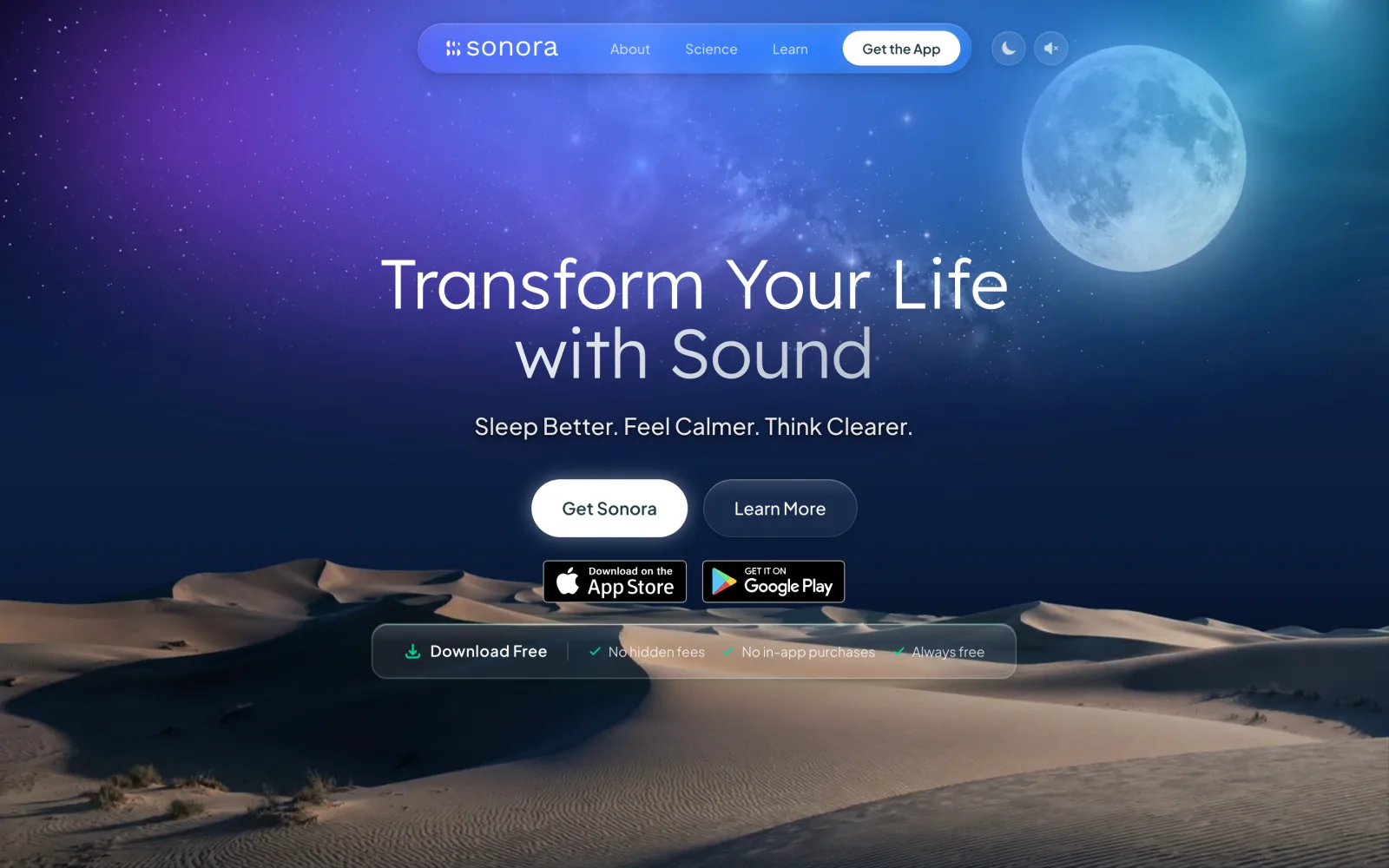
sonora.com
The Sonora homepage on desktop: a full-bleed dune landscape behind the headline “Transform Your Life with Sound”, with App Store and Google Play download buttons.
sonora.com — homepage, 1440×900 sonora.com →
Live Consumer wellness · Mobile + web

Sonora

Cognitive AI Ltd · 2026

A free sound-wellness app, described by its publisher as AI sound therapy that reads a short vocal sample at the start of a session and generates a soundscape for that moment. We designed and built the website and its backend, produced assets for the iOS and Android apps, and supported the application prototype.
Read the case study →

See every published project →

WHO WE HAVE BUILT FOR

Twenty-one years of applications, platforms and campaigns for names you know.

See all of our work →