Dark theme
WELCOME TO QQUANTUM

Let Qubi show you around.

Choose how you’d like to explore.

Don’t agreeGo to yourOS instead ↗

Both choices allow Google Analytics, so we can see which pages help.

Sound is your choice. Essential cookies keep the site working. Continuing either way also allows Google Analytics (visits and pages viewed).

Read our Terms, Privacy and Cookies.

Change your choices anytime from the footer.

Getting Qubi ready.
Resource

Is your data ready for AI?

Most AI projects that stall do not stall on the model. They stall on a document set that two departments maintain differently, a permissions model nobody can express, or the absence of anyone who can say which of two contradictory answers is correct. Here is how to find that out in a fortnight rather than in month six.

All Resources →
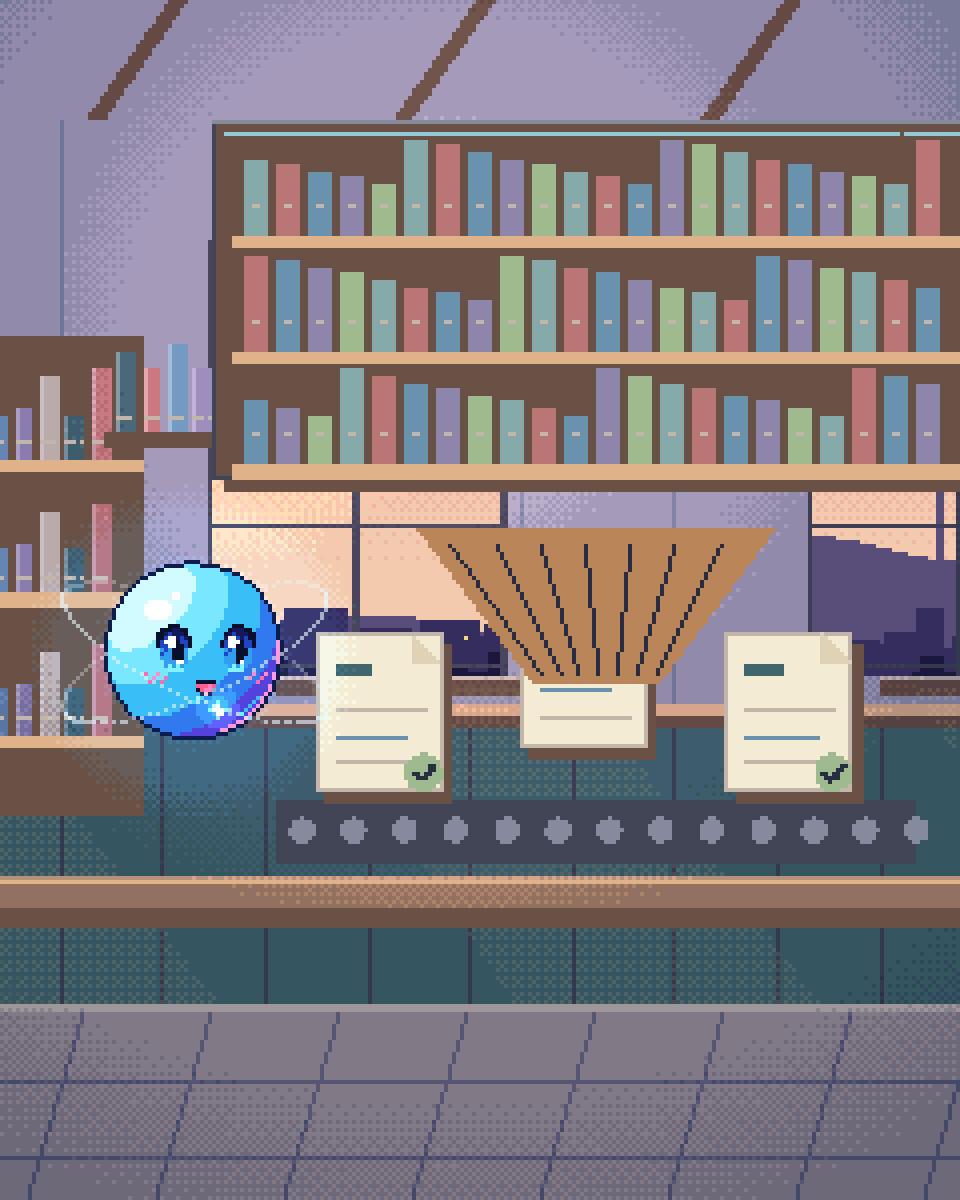
Pixel illustration for Is Your Data Ready for AI?: a physical sieve separating complete cards from cards needing attention.

The diagnostic

01

Does it exist, and can you get at it

Two separate questions. Data that exists inside a vendor system with no export, a database only one team may query, or a format that needs a licence you do not hold is data you do not have for this purpose. Answer the access question with an actual extract, not with an assurance from the system owner.
02

Is it findable

Can you enumerate it? A share drive where the authoritative version of a document is whichever copy the last person edited is not a corpus, it is a search problem wearing a corpus costume. If nobody can produce a list of what is in scope, that list is the first deliverable.
03

Can you express who may see what

This is where more projects die than any other technical cause. If permissions live in people’s heads, in folder structures that drifted, or in a rule like “the finance team, except contractors, except during audit”, then a retrieval system cannot enforce them — and a system that answers from a document the asker was not entitled to read is a data breach with a chat interface.
04

Volume versus quality

Teams overvalue volume. A hundred thousand tickets of which most are one-line non-answers is worse than four hundred well-resolved ones, because the first set teaches a system what your organisation does badly. Sample fifty records at random and read them properly before believing any count.
05

Is there a ground truth

For any task where correctness matters, somebody has to be able to say what the right answer was. Sometimes it exists already — the adjudicated claim, the accepted invoice, the resolved ticket. Sometimes it must be created by an expert labelling a few hundred cases. If neither is possible, you cannot evaluate the system, and you should not build it.
06

Freshness and the update path

How stale is the data now, and what happens when it changes? A corpus that is refreshed by a person remembering to re-run an export will be wrong within a quarter. The update path is part of the system, and costing it is part of the estimate — including the reindexing, which is a running cost rather than a one-off.
07

Duplication and contradiction

Two documents that disagree, both current, both authoritative-looking. This is the most common real blocker we meet, and it is treated at length below.
08

Structured, unstructured, or worse

Structured data is easy to query and rarely holds the answer. Unstructured prose holds it and needs retrieval. The awkward middle — spreadsheets used as databases, PDFs of tables, forms scanned as images — needs specific handling, and it is usually the largest category by volume in an established organisation.
09

Can a deletion propagate

If a person exercises their right to erasure, or a document is withdrawn, what has to happen? The source record, the extracted copy, the embedding in the vector store, the cache, the logs. If you cannot describe that path today, design it before you build the index rather than after a request arrives with a statutory clock on it.
10

Is anyone accountable for it

A corpus with no owner degrades. Someone must be able to decide what is authoritative, retire what is not, and be interrupted when the system finds a contradiction. If no name can be put against that role, the readiness problem is organisational, and no amount of engineering will fix it.
The contradiction problem

The failure that surprises people is not the model inventing an answer. It is the model giving a correct answer that the business disagrees with, because two of its own documents say different things and the retrieval step happened to find one of them.

The 2019 policy and the 2024 policy are both in the share drive, both look official, and neither says which supersedes the other. The onboarding guide and the intranet page describe different approval thresholds. The product specification and the support macro give different return windows. Every organisation over a certain age has hundreds of these, and nobody notices because a human reader applies context that is not written down anywhere: they know which team maintains which document, they know the 2019 one is dead, they have heard the corridor conversation.

A retrieval system has none of that context, and it will confidently surface the wrong one for the same reason a new joiner would. Worse, it does it consistently, at volume, and with a citation that makes the answer look verified.

There is a useful reframing here. A system that surfaces contradictions is doing you a service, and the fortnight of measurement below usually produces a list of them as its first real output. That list is an asset — it is the documentation debt made visible for the first time, and it is often worth more to the organisation than the system that found it. What it is not is something the model can resolve. Deciding which document is authoritative is an act of ownership, and it needs a person with the standing to make it.

Practically, this means one thing for scoping: prefer a corpus with a live owner and a maintenance habit over a larger one without. A thousand pages someone maintains beats forty thousand nobody does, and it is a much better first system.

The self-assessment

Score each row honestly, and note where the honest answer is “I would have to ask”. A row you cannot answer is not neutral — it is a red row that has not been checked yet.

Compare your options
A readiness self-assessment. Qualitative by design — these are questions to answer about your own corpus, not a score with a threshold.
Criterion Ready Workable Stop and fix first
Access You can produce an extract this week Access needs a request and a fortnight It lives in a system with no export
Enumeration A list of what is in scope exists A list can be built from a crawl Nobody can say what is in scope
Permissions Expressible as rules against identities Expressible for most, with known exceptions Lives in folder structure and memory
Ground truth Adjudicated outcomes already recorded An expert can label 200 cases No one can say what the right answer was
Freshness Automated update path exists Manual refresh with a named owner Last updated at some point, unclear when
Contradiction Superseded versions are retired Duplicates exist and are identifiable Multiple current versions, no owner
Format Text or clean structured records Mixed, with scanned documents present Spreadsheets used as databases
Deletion A propagation path is documented Deletion is manual but traceable Copies exist in places nobody tracks
Ownership A named person decides what is current Ownership is shared but reachable No owner, and no candidate

Two or three rows in the right-hand column is normal and not a reason to stop; it is a reason to narrow the scope until those rows fall outside it. A red under permissions, ground truth or ownership is different in kind, because each of those blocks something the engineering cannot supply — a lawful retrieval boundary, a way to know whether the system works, and a person able to resolve what it finds.

What to do instead of a projection

The temptation at this point is a data readiness programme: eighteen months, a catalogue, a governance board, and an AI project at the end of it. We would generally advise against that as a precondition, because the programme tends to outlive the enthusiasm that funded it, and because the fastest way to find out which data problems actually matter is to try to use the data for something specific.

The alternative is a fortnight of measurement against one narrow question. Take the real corpus, not a curated sample. Write forty to a hundred questions a person actually asks, with their correct answers agreed by someone with the standing to agree them. Run retrieval against the corpus and score how often the right passage is found at all. That number — retrieval hit rate, before any generation — tells you more about feasibility than any survey of your data estate, and it takes days rather than quarters.

What comes back is usually threefold: a realistic accuracy ceiling for this corpus, a list of contradictions worth resolving regardless of whether anything is ever built, and a clear view of whether the permissions model can be expressed. Any of those three justifies the fortnight on its own. And if the answer is that the corpus cannot support the system you wanted, that is a good outcome purchased cheaply — it is far better to learn it from an evaluation set than from a pilot that has already been announced internally.

Two further notes. First, this measurement is also the baseline you will need later: a claim about improvement requires a dated before, and the ROI page sets out why an unmeasured baseline makes every later return unfalsifiable. Second, the fortnight is scoped work with a written output, and we run it as a paid engagement rather than as a free consultation, precisely so it is done properly and belongs to you at the end. The readiness assessment page describes the shape.

Questions

Questions about Is Your Data Ready for AI?.

How much data do we need?

For a retrieval system, far less than people expect — retrieval works over documents you already have, and a well-maintained thousand pages is a better starting corpus than a neglected forty thousand. For fine-tuning, the question is different and the honest answer is that you need a labelled set with a defensible ground truth, which is usually the constraint rather than the volume. In both cases, the binding number is not the size of the corpus but the size of the evaluation set, and forty to a hundred well-chosen questions is enough to start.

Our data is messy. Should we clean it first?

Only the part you are about to use, and only once you know which mess matters. A general cleaning programme ahead of a specific use is expensive and tends to tidy the wrong things. Running a narrow evaluation against the real corpus tells you which problems block the system and which are merely untidy, and that list is a much better cleaning brief than a data quality audit.

What if two of our documents contradict each other?

Then a person has to decide which is authoritative, because no model can. Expect this: it is the most common blocker we meet, and it is the reason a project can be technically sound and still produce answers the business rejects. The useful reframe is that the system found a contradiction that was already costing you, silently, in the form of staff giving customers different answers.

Can you work with data we cannot let leave our network?

Yes. That constraint changes the deployment model rather than the diagnostic: open-weight models on your own infrastructure, and in some cases an air-gapped environment. It also changes the capability ceiling and the cost, and we would rather state that trade-off during scoping than let it be discovered after a pilot on a hosted model that was never going to be allowed in production.

Would you tell us not to build something?

Yes, and it happens. The most common cases are an absent ground truth, a permissions model that cannot be expressed, and a corpus with no owner — in each of those the engineering is not the constraint and building would produce a system nobody could trust. It is a better conversation to have in the first fortnight than in the second quarter.

Shipped & in build

Real work. Check it yourself.

What we built, what stage it is at, and a link to the live thing wherever there is one.

The updated yourOS homepage: Roxy’s open ring surrounded by bento cards for calls, voice, translation, building, design, apps and more.
The yourOS homepage on a phone, with its compact navigation, welcome film button and bento cards.
youros.tech — the homepage bento hero
Our own · coming soon

yourOS

yourOS is an operating system with an AI at its heart. You talk to it like a person, out loud or typed. It makes your calls, plans your days and works on your projects with a crew of agents, on your own private server. Our own product, built from the first commit; the waitlist is open.

What we built
  • Operating system
  • Roxy
  • Agent crew
  • Voice calls
  • App store
  • Website
Meet yourOS →
The Sonora homepage on desktop: a full-bleed dune landscape behind the headline “Transform Your Life with Sound”, with App Store and Google Play download buttons.
The Sonora homepage on a mobile viewport, showing the same hero reflowed to a single column.
sonora.com — homepage, 1440×900
Live · iOS · Android

Sonora

Website, backend and app assets for Sonora, a free AI sound-therapy app on iOS and Android published by Cognitive AI.

What we built
  • Website
  • Backend
  • App assets
Read the case study →
The updated Podswap homepage on desktop: “Grow on Instagram and TikTok for free, with real engagement from creators your size”, beside a tilted wall of exchange, tool and guide cards on a violet gradient.
The updated Podswap homepage on a phone, with its floating navigation, Instagram and TikTok engagement headline and tilted tool cards.
podswap.app — homepage, 1440×900
Five platforms

Podswap

Brand, website, prototype, apps on five platforms, the AI backend and the algorithm-intelligence pipeline for Podswap, a social growth engine that runs without a human in the loop.

What we built
  • Brand
  • Website
  • Prototype
  • Apps on five platforms
  • AI backend
  • Algorithm pipeline
Read the case study →
The unOpen.AI homepage introducing Roxy, a private AI assistant that remembers who you are.
The unOpen.AI homepage on a mobile viewport.
unopen.ai — homepage, 1440×900
Prototype · closed beta

unOpen.AI

In closed beta: Roxy, a private AI assistant with permanent memory running on infrastructure the user owns. Brand, site, product, backend and conversational design.

What we built
  • Brand
  • Site
  • Product
  • Backend
  • Conversational design
Read the case study →
coherence.com on desktop, headed "Intelligence that moves in phase with people".
coherence.com on a mobile viewport, reflowed to a single column.
coherence.com — homepage, 1440×900
Live

Coherence

Live at coherence.com: brand identity generated with AI agents we directed, the motion system and website for the group behind Sonora, AboutAI, WakeUp and MudShadows. Agent work remains in build.

What we built
  • Brand identity
  • Motion system
  • Live website
  • Agent work — in build
Read the case study →
The new Domain Booth homepage on desktop: the headline “Premium Domains. Serious Buyers. Proven Results.” beside the animated DB monogram.
The new Domain Booth homepage on a phone, reflowed to a single column.
Our build of the Domain Booth homepage — 1440×900
Live

Domain Booth

Live at domainbooth.com for DomainBooth, a premium domain brokerage: a new animated mark, every page redesigned and rebuilt with designed mobile layouts, and a custom CMS for its sales record, featured names, press and enquiries.

What we built
  • Animated mark
  • Every page redesigned
  • Designed mobile layouts
  • Custom CMS
Read the case study →
Who we have built for

Twenty-one years. Names you know.

See all of our work →
  • BBC Good Food logo
  • Charities Aid Foundation logo
  • GAME logo
  • NatWest logo
  • Next logo
  • NSPCC logo
  • Tesco logo
  • Worldpay logo
  • Samsung logo
  • Sony logo
  • Land Rover logo
  • UAP Limited logo
  • Netflix logo
  • Amazon Prime Video logo
  • Mercedes-Benz dealerships logo
  • San Miguel logo
  • Biovene Barcelona logo
  • Seventy7 logo
  • Littlewoods logo
  • Smile logo
  • The Co-operative Bank logo
Let’s talk

Measure a fortnight.
Not a quarter.

One narrow question, the real corpus, and a hundred questions with agreed answers. That is enough to know whether there is a system here.

30-minute technical call · no deck





















