Dark theme
WELCOME TO QQUANTUM

Let Qubi show you around.

Choose how you’d like to explore.

Don’t agreeGo to yourOS instead ↗

Both choices allow Google Analytics, so we can see which pages help.

Sound is your choice. Essential cookies keep the site working. Continuing either way also allows Google Analytics (visits and pages viewed).

Read our Terms, Privacy and Cookies.

Change your choices anytime from the footer.

Getting Qubi ready.
FAQ

Frequently asked questions.

The questions we get on first calls, answered the way we answer them on first calls.

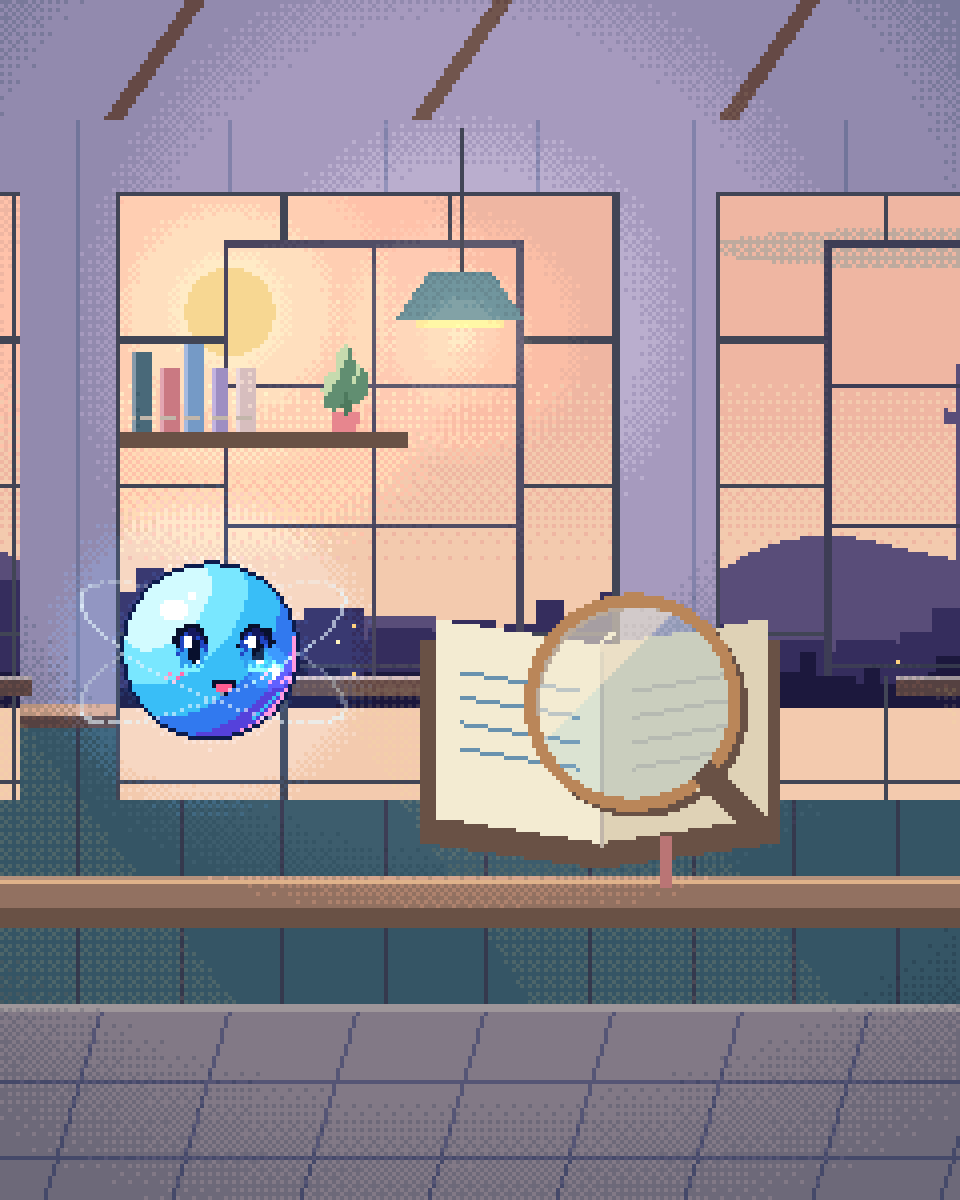
Pixel illustration for Frequently Asked Questions: an open reference book under a warm reading lamp.
ENGAGEMENTS

Questions about working together.

What does a typical engagement look like?

Discovery first — two to four weeks establishing what is buildable, what it should cost and how success will be measured. Then a scoped build, usually six to sixteen weeks. Then either handover to your team or an ongoing arrangement, decided explicitly rather than by default. We do not have a minimum contract length and we do not require a retainer to start.

How much does an AI project cost?

A discovery engagement is typically €8–20k depending on scope. A focused build lands between €30k and €120k. Ongoing fractional arrangements run €4–9k a month. All figures are in EUR and exclude VAT. Those bands are rough estimates drawn from past client work, and they are wide because scope varies enormously. Every project is quoted on its own scope after a scoping call; large or multi-phase programmes sit outside the bands entirely and get a proposal written for them.

Do we own what you build?

Entirely. Code in your repositories, infrastructure as code in your accounts, any fine-tuned weights yours. No proprietary platform, no licence, no runtime dependency on us. If your team wants to take it over, we write the handover documentation as part of the work rather than as a paid extra.

How quickly can you start?

Usually one to three weeks depending on current commitments. If you need something faster than that, tell us on the first call — occasionally we can, and if we cannot we would rather say so than let a deadline slip quietly.

Will you tell us not to build something?

Yes, and we do regularly. A meaningful share of enquiries resolve to an off-the-shelf product plus a week of integration, or to a process fix that needs no AI at all. Taking on a project we expect to fail costs us more in reputation than it earns in fees.

TECHNOLOGY

Questions about the technology.

Which models do you use?

Whichever fits the workload — Claude, GPT, Gemini, and open-weight models like Llama, Mistral, Qwen and DeepSeek where self-hosting is required. We are not a reseller for any provider and have no incentive to prefer one. Selection is driven by data-residency constraints, task requirements, latency budget and cost at your volume, and we benchmark against your data rather than a leaderboard.

Can everything run inside our infrastructure?

Yes. We deploy into client VPCs on AWS, Azure and GCP routinely, and can run entirely on open-weight models on your own hardware where nothing may leave the perimeter. There is a real capability trade-off with fully self-hosted open models on the hardest reasoning tasks, and we scope which parts of a system genuinely need that constraint rather than applying it uniformly.

Do you eliminate hallucination?

No, and nobody does — be wary of anyone claiming otherwise. What good architecture does is make model error detectable and attributable: every answer cites the passage it came from, so an unsupported claim has no citation and a reviewer can spot it in seconds. That is the achievable and more useful goal.

How do you measure whether a system works?

With an evaluation set built in the first week — real inputs with human-verified correct outputs, scored automatically and run as a gate before every deploy. Without it, quality is anecdote. It is the single highest-leverage thing in an AI project and the most commonly skipped.

What happens when a model gets deprecated?

We pin model versions in production and put the model behind an interface, so a migration is a change with a regression gate rather than a rewrite. Run the eval suite against the new version, review the diff, migrate deliberately. Systems whose prompts are entangled with one specific model version are the ones that suffer here.

TRUST

Questions about security and compliance.

Are you SOC 2 or ISO 27001 certified?

No. We hold no security certifications at this time, and we say so plainly rather than displaying badges we have not earned. We implement the controls those frameworks describe and document them per engagement, and we build systems that generate evidence for your own compliance obligations. If your procurement has a hard certification gate, we will not clear it — and we would rather you knew that on the first call.

Is our data used to train models?

Not on the enterprise API paths we deploy. We request zero-retention configurations where the provider offers them and document what was actually enabled in the architecture document rather than pointing at a general policy page. Provider terms change; we confirm against the current terms at the time of the build. Where you consume models through Bedrock, Vertex or Azure, data handling follows your existing agreement with that cloud provider.

How do you handle prompt injection?

As an authorisation problem rather than a filtering one. Content retrieved from documents, tickets or web pages is treated as untrusted data and can never authorise a tool call. Tools carry least privilege and destructive operations require confirmation. Filtering helps at the margins but cannot be the primary control when the attack surface is everything the system reads.

Can you sign a DPA?

Yes, and we can work from your paper. Standard contractual clauses where a transfer requires them. Where a system runs entirely in your infrastructure and we never hold your data, we will say so rather than papering over a processing relationship that does not exist.

COMPANY

Questions about our studio.

Where are you based?

Barcelona, Spain. We work with clients across the EU and remotely, and travel for discovery workshops where being in the room genuinely helps — which it often does in the first week and rarely does afterwards.

How big are you?

A small senior team rather than a pyramid. That means the people on your first call are the people who build the system, and it also means we take on fewer projects at once. If we are at capacity we will tell you rather than staffing you with someone we just hired.

Do you have case studies?

We publish reference architectures instead — the designs, the failure modes and what to measure — because they are more useful and because we will not publish client results we cannot evidence. Most client work is under NDA. The projects we can name are on our work page, each with what we built, what we did not, and a link to the live site; client results we cannot evidence stay unpublished.

What if we are not sure what we need?

That is a normal starting point and often a healthier one than arriving with a fixed solution. A discovery engagement exists precisely for this: assess what is feasible, what is valuable, and what should not be built. The output is written to stand alone and be usable by another vendor.

Question not
answered here?

Ask it directly. We answer awkward ones too.

30-minute call · no deck

Shipped & in build

Real work. Check it yourself.

What we built, what stage it is at, and a link to the live thing wherever there is one.

The updated yourOS homepage: Roxy’s open ring surrounded by bento cards for calls, voice, translation, building, design, apps and more.
The yourOS homepage on a phone, with its compact navigation, welcome film button and bento cards.
youros.tech — the homepage bento hero
Our own · coming soon

yourOS

yourOS is an operating system with an AI at its heart. You talk to it like a person, out loud or typed. It makes your calls, plans your days and works on your projects with a crew of agents, on your own private server. Our own product, built from the first commit; the waitlist is open.


What we built
  • Operating system
  • Roxy
  • Agent crew
  • Voice calls
  • App store
  • Website
Meet yourOS →
The Sonora homepage on desktop: a full-bleed dune landscape behind the headline “Transform Your Life with Sound”, with App Store and Google Play download buttons.
The Sonora homepage on a mobile viewport, showing the same hero reflowed to a single column.
sonora.com — homepage, 1440×900
Live · iOS · Android

Sonora

Website, backend and app assets for Sonora, a free AI sound-therapy app on iOS and Android published by Cognitive AI.

What we built
  • Website
  • Backend
  • App assets
Read the case study →
The updated Podswap homepage on desktop: “Grow on Instagram and TikTok for free, with real engagement from creators your size”, beside a tilted wall of exchange, tool and guide cards on a violet gradient.
The updated Podswap homepage on a phone, with its floating navigation, Instagram and TikTok engagement headline and tilted tool cards.
podswap.app — homepage, 1440×900
Five platforms

Podswap

Brand, website, prototype, apps on five platforms, the AI backend and the algorithm-intelligence pipeline for Podswap, a social growth engine that runs without a human in the loop.

What we built
  • Brand
  • Website
  • Prototype
  • Apps on five platforms
  • AI backend
  • Algorithm pipeline
Read the case study →
The unOpen.AI homepage introducing Roxy, a private AI assistant that remembers who you are.
The unOpen.AI homepage on a mobile viewport.
unopen.ai — homepage, 1440×900
Prototype · closed beta

unOpen.AI

In closed beta: Roxy, a private AI assistant with permanent memory running on infrastructure the user owns. Brand, site, product, backend and conversational design.

What we built
  • Brand
  • Site
  • Product
  • Backend
  • Conversational design
Read the case study →
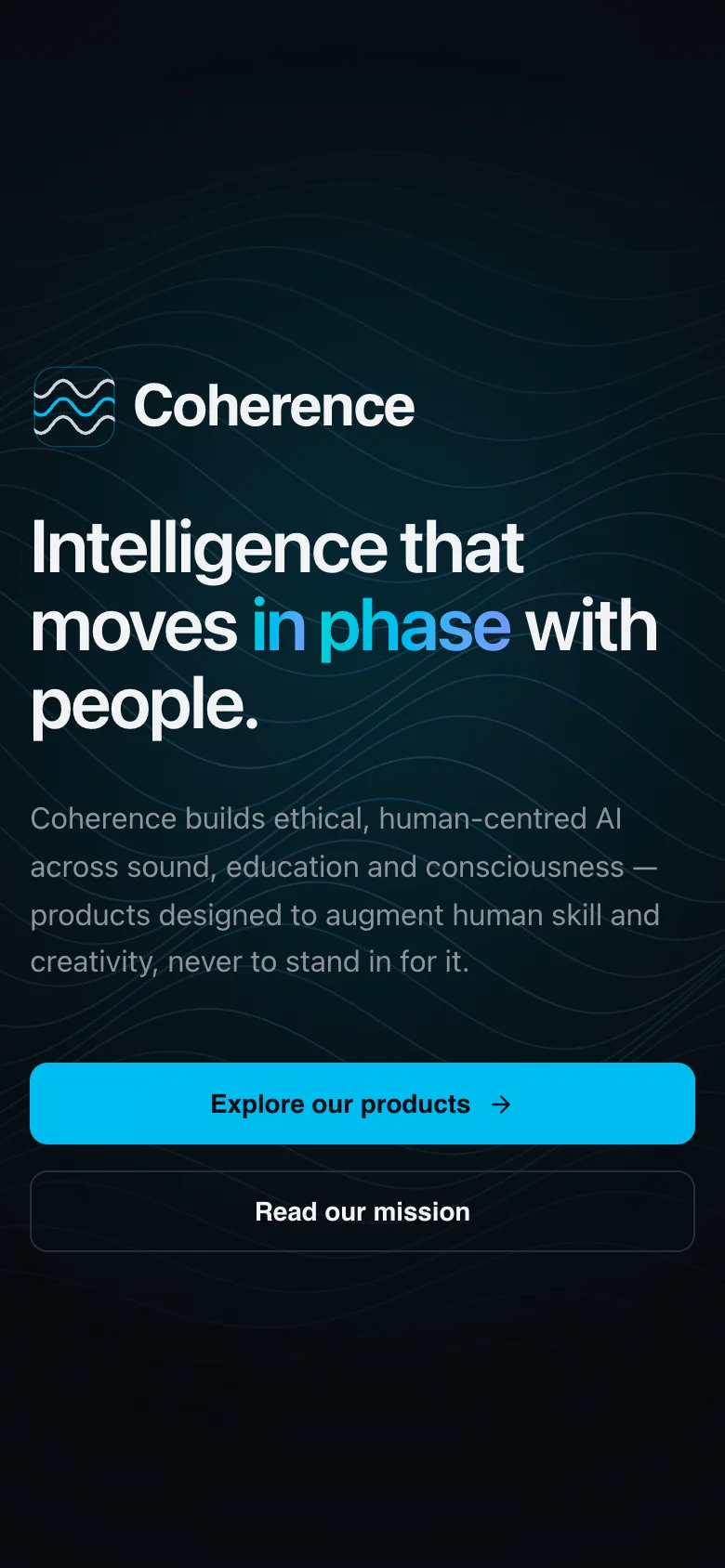
coherence.com on desktop, headed "Intelligence that moves in phase with people".
coherence.com on a mobile viewport, reflowed to a single column.
coherence.com — homepage, 1440×900
Live

Coherence

Live at coherence.com: brand identity generated with AI agents we directed, the motion system and website for the group behind Sonora, AboutAI, WakeUp and MudShadows. Agent work remains in build.

What we built
  • Brand identity
  • Motion system
  • Live website
  • Agent work — in build
Read the case study →
The new Domain Booth homepage on desktop: the headline “Premium Domains. Serious Buyers. Proven Results.” beside the animated DB monogram.
The new Domain Booth homepage on a phone, reflowed to a single column.
Our build of the Domain Booth homepage — 1440×900
Live

Domain Booth

Live at domainbooth.com for DomainBooth, a premium domain brokerage: a new animated mark, every page redesigned and rebuilt with designed mobile layouts, and a custom CMS for its sales record, featured names, press and enquiries.

What we built
  • Animated mark
  • Every page redesigned
  • Designed mobile layouts
  • Custom CMS
Read the case study →
Who we have built for

Twenty-one years. Names you know.

Apps, platforms and campaigns for these teams, long before the AI work. Every one is written up on the work page — what we did, and where our part ended.

See all of our work →
  • BBC Good Food logo
  • Charities Aid Foundation logo
  • GAME logo
  • NatWest logo
  • Next logo
  • NSPCC logo
  • Tesco logo
  • Worldpay logo
  • Samsung logo
  • Sony logo
  • Land Rover logo
  • UAP Limited logo
  • Netflix logo
  • Amazon Prime Video logo
  • Mercedes-Benz dealerships logo
  • San Miguel logo
  • Biovene Barcelona logo
  • Seventy7 logo
  • Littlewoods logo
  • Smile logo
  • The Co-operative Bank logo