Dark theme
WELCOME TO QQUANTUM

Let Qubi show you around.

Choose how you’d like to explore.

Don’t agreeGo to yourOS instead ↗

Both choices allow Google Analytics, so we can see which pages help.

Sound is your choice. Essential cookies keep the site working. Continuing either way also allows Google Analytics (visits and pages viewed).

Read our Terms, Privacy and Cookies.

Change your choices anytime from the footer.

Getting Qubi ready.
Legal

Legal research.
Cited, or silent.

Lawyers have been sanctioned for filing submissions containing cases that did not exist. That is not an argument against AI in legal research — it is an argument against a specific architecture, and the correct one makes a non-resolving citation structurally unable to reach a user.

Last reviewed 4 September 2026 · Engineering guidance, not legal advice.
All Legal & Compliance →
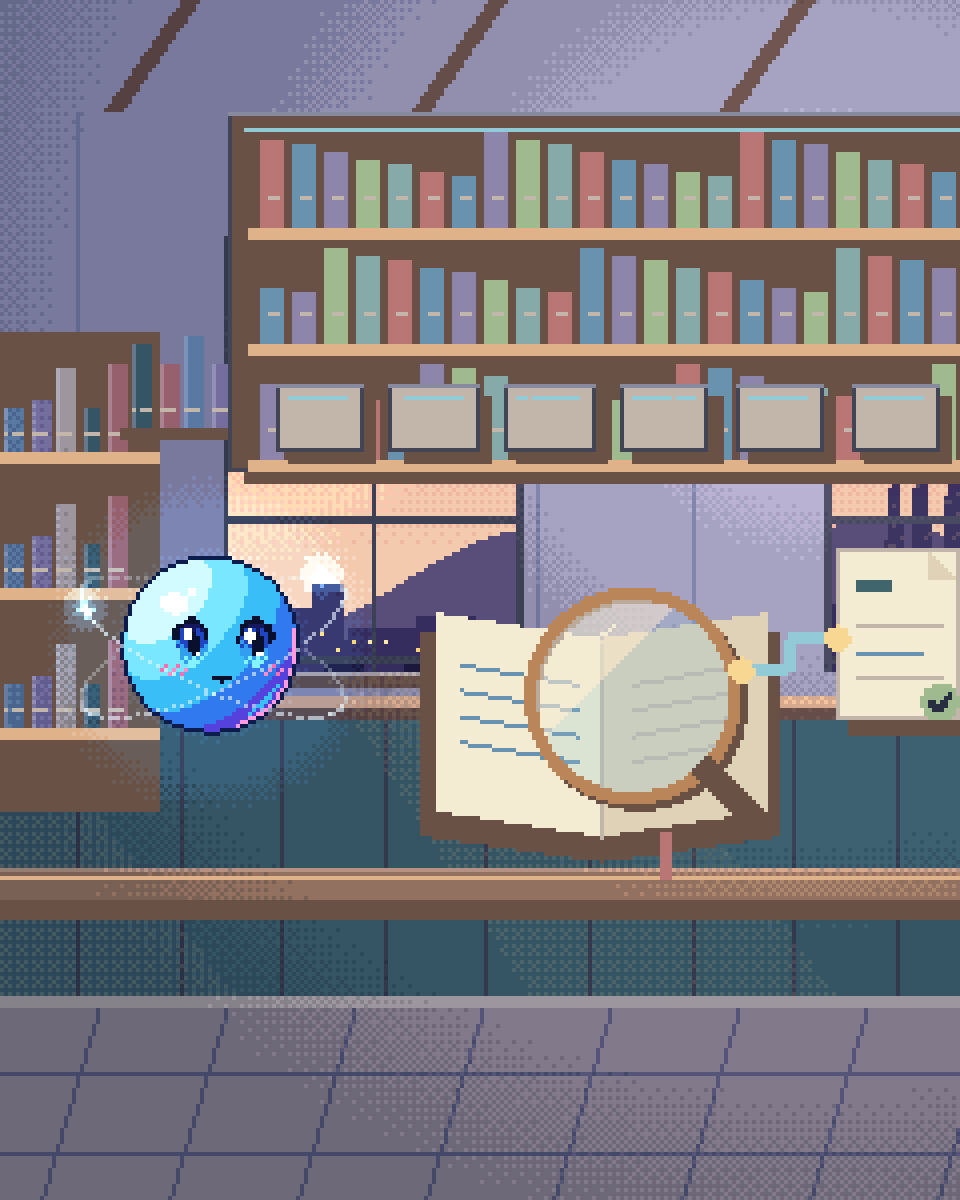
Pixel illustration for Legal Research: an open source book connected to a magnifying lens and an answer card.

Why fabricated citations happen

A language model asked a legal question with no retrieval layer generates text that resembles a correct answer. Case citations have a strong, learnable format, so the model produces well-formed citations — to cases that do not exist. This is not a bug in the model. It is the model doing exactly what it was built to do, applied to a task it was never suited to.

The fix is architectural rather than a matter of better prompting or a better model. The system retrieves from an actual corpus of authority, generates only from retrieved passages, and validates before returning that every citation in the output corresponds to a document that was actually retrieved. A citation that does not resolve does not leave the system.

Built that way, the failure mode changes from a confident fabrication to an admission that nothing relevant was found — which is a safe failure a lawyer can work with, and the only acceptable one in this setting.

The architecture

GROUNDED RESEARCH PATH
  1. 01
    Question

    from a lawyer

  2. 02
    Retrieve

    from your authority corpus

  3. 03
    Rerank

    precision over recall

  4. 04
    Generate

    from retrieved passages only

  5. 05
    Validate citations

    every one must resolve

  6. 06 · Branch / escalation
    Nothing found

    say so, do not invent

Solid: the grounded pathDashed: the safe failure
The validation step is not a quality check. It is the control that stops a citation which does not resolve from reaching a user. It does not guarantee the case says what the summary claims, which is why every proposition is still read at source.

Where it is genuinely useful

  • Your own precedent, which nobody has indexed.

    Most firms and in-house teams hold years of advice, memoranda and prior submissions that are effectively unsearchable. A retrieval system over that corpus answers the question lawyers actually ask most often — have we looked at this before, and what did we say?
  • First-pass framing on an unfamiliar question.

    Not a substitute for research, but a fast orientation: what the relevant authorities are, how the question is usually framed, where the disagreement sits. It saves the first hour, which is worth having.
  • Comparison across jurisdictions.

    Where a client operates in several and the question is how positions differ. Time-consuming by hand and well suited to structured extraction, provided each jurisdiction's corpus is properly separated.

What it is not is a research substitute. Every proposition a lawyer relies on gets checked at source, exactly as it would if a trainee had produced it. The system makes finding the source faster; it does not remove the obligation to read it.

Questions

Questions about Legal Research.

Can it hallucinate cases?

A citation to a case that does not exist is structurally prevented in the output path: generation happens only over retrieved passages, and a validation step rejects any output containing a citation that does not resolve to a retrieved document. That is a structural control rather than a probabilistic improvement. It does not stop a real case being cited for a proposition it does not support, which is the more common failure now and why the span is shown for the lawyer to read at source.

Does it replace a legal database subscription?

No. It needs a corpus, and for published authority that generally means a licensed source, indexed subject to the licence terms of that source. What it adds is your internal material, which no external provider has, and a retrieval interface over both.

How do we handle superseded authority?

The corpus carries currency metadata and the system surfaces it, but the treatment status of a case is a question for a proper citator. We would rather integrate one than approximate it, because being subtly wrong about whether a case is still good law is worse than not answering.

Ground it, or
do not ship it.

The sanctioned filings were a grounding failure, and a verification failure too. The correct architecture is not harder to build.

30-minute technical call · no deck

Shipped & in build

Real work. Check it yourself.

What we built, what stage it is at, and a link to the live thing wherever there is one.

The updated yourOS homepage: Roxy’s open ring surrounded by bento cards for calls, voice, translation, building, design, apps and more.
The yourOS homepage on a phone, with its compact navigation, welcome film button and bento cards.
youros.tech — the homepage bento hero
Our own · coming soon

yourOS

yourOS is an operating system with an AI at its heart. You talk to it like a person, out loud or typed. It makes your calls, plans your days and works on your projects with a crew of agents, on your own private server. Our own product, built from the first commit; the waitlist is open.


What we built
  • Operating system
  • Roxy
  • Agent crew
  • Voice calls
  • App store
  • Website
Meet yourOS →
The Sonora homepage on desktop: a full-bleed dune landscape behind the headline “Transform Your Life with Sound”, with App Store and Google Play download buttons.
The Sonora homepage on a mobile viewport, showing the same hero reflowed to a single column.
sonora.com — homepage, 1440×900
Live · iOS · Android

Sonora

Website, backend and app assets for Sonora, a free AI sound-therapy app on iOS and Android published by Cognitive AI.

What we built
  • Website
  • Backend
  • App assets
Read the case study →
The updated Podswap homepage on desktop: “Grow on Instagram and TikTok for free, with real engagement from creators your size”, beside a tilted wall of exchange, tool and guide cards on a violet gradient.
The updated Podswap homepage on a phone, with its floating navigation, Instagram and TikTok engagement headline and tilted tool cards.
podswap.app — homepage, 1440×900
Five platforms

Podswap

Brand, website, prototype, apps on five platforms, the AI backend and the algorithm-intelligence pipeline for Podswap, a social growth engine that runs without a human in the loop.

What we built
  • Brand
  • Website
  • Prototype
  • Apps on five platforms
  • AI backend
  • Algorithm pipeline
Read the case study →
The unOpen.AI homepage introducing Roxy, a private AI assistant that remembers who you are.
The unOpen.AI homepage on a mobile viewport.
unopen.ai — homepage, 1440×900
Prototype · closed beta

unOpen.AI

In closed beta: Roxy, a private AI assistant with permanent memory running on infrastructure the user owns. Brand, site, product, backend and conversational design.

What we built
  • Brand
  • Site
  • Product
  • Backend
  • Conversational design
Read the case study →
coherence.com on desktop, headed "Intelligence that moves in phase with people".
coherence.com on a mobile viewport, reflowed to a single column.
coherence.com — homepage, 1440×900
Live

Coherence

Live at coherence.com: brand identity generated with AI agents we directed, the motion system and website for the group behind Sonora, AboutAI, WakeUp and MudShadows. Agent work remains in build.

What we built
  • Brand identity
  • Motion system
  • Live website
  • Agent work — in build
Read the case study →
The new Domain Booth homepage on desktop: the headline “Premium Domains. Serious Buyers. Proven Results.” beside the animated DB monogram.
The new Domain Booth homepage on a phone, reflowed to a single column.
Our build of the Domain Booth homepage — 1440×900
Live

Domain Booth

Live at domainbooth.com for DomainBooth, a premium domain brokerage: a new animated mark, every page redesigned and rebuilt with designed mobile layouts, and a custom CMS for its sales record, featured names, press and enquiries.

What we built
  • Animated mark
  • Every page redesigned
  • Designed mobile layouts
  • Custom CMS
Read the case study →
Who we have built for

Twenty-one years. Names you know.

Apps, platforms and campaigns for these teams, long before the AI work. Every one is written up on the work page — what we did, and where our part ended.

See all of our work →
  • BBC Good Food logo
  • Charities Aid Foundation logo
  • GAME logo
  • NatWest logo
  • Next logo
  • NSPCC logo
  • Tesco logo
  • Worldpay logo
  • Samsung logo
  • Sony logo
  • Land Rover logo
  • UAP Limited logo
  • Netflix logo
  • Amazon Prime Video logo
  • Mercedes-Benz dealerships logo
  • San Miguel logo
  • Biovene Barcelona logo
  • Seventy7 logo
  • Littlewoods logo
  • Smile logo
  • The Co-operative Bank logo





















