Instrument theme
Services 29 service pages Model-agnostic Code delivered to your repositories

All our AI services.

Six service lines, one engineering practice underneath them. This page is the index over all of them — what each one is for, what it is not for, and which one to start with if you are not sure.

QQuantum maker connecting six AI engineering services into one working system
AT A GLANCE
Who we are
QQuantum.ai is an AI systems engineering studio based in Barcelona, working remotely with clients across Europe and beyond.
What we sell
Custom-built AI systems and the engineering around them. We are not a software reseller, and we take no commission from any model provider or cloud.
Six service lines
AI architectures, autonomous employees, intelligent automation, algorithmic marketing, creative design and rapid prototyping.
How it starts
A scoped pilot, typically two to six weeks, that answers one question about your workload before anyone commits to a platform.
What you keep
The source code, in your repositories, running on infrastructure you control if you want it there. No licence to renew to keep the system running.
What we do not claim
We hold no security certifications or vendor accreditations, and we publish no client metrics we have not measured. Where a page shows numbers, it says whether they are design targets or measurements.
WHAT THE SIX HAVE IN COMMON

The service lines below are six ways into the same practice. Underneath all of them is one job: getting a language model to do useful work on your data, repeatedly, in a way somebody can check. The differences between them are differences of shape — an agent that holds a role, a pipeline that runs unattended, an interface a customer touches — rather than differences of underlying craft.

That is why the split is by what you are buying rather than by technology. A retrieval system, a support agent and a lead-qualification workflow may share most of their code and all of their evaluation harness; they are separate pages because they are separate decisions, with different budgets, different owners and different ways of going wrong.

Four things are constant across every engagement, and they are the parts most likely to be missing when a project arrives here from somewhere else. Retrieval and citation, so an answer can be traced to the passage it came from. Evaluation that keeps running after launch, built from real examples of your task, because quality decays quietly. Observability, so a bad week is visible before a customer reports it. And an exit: the code is yours, the model is a swappable component, and nothing in the design assumes we are still here in a year.

What we do not do is sell a platform. There is no QQuantum runtime you have to keep paying for, and no architecture we prefer because we resell part of it. Model providers deprecate versions and change prices; a system that treats the model as a component survives that, and one built around a single vendor's quirks does not.

THE SIX SERVICE LINES

29 pages in total. Each line opens onto its own services; the count on the right of a row is how many sit underneath it.

WHICH ONE DO YOU NEED?
01

Your data is the problem

The knowledge exists but nobody can get an answer out of it — it is spread across a document store, a warehouse and a system nobody wants to touch. Start with architectures: retrieval, orchestration and the pipelines that reach the data where it already lives.
AI ARCHITECTURES
02

A role is the bottleneck

The work is well understood and there is simply more of it than the team can carry — support tickets, account research, recurring analysis. Start with agents that hold the role end to end and escalate what they cannot evidence.
AUTONOMOUS EMPLOYEES
03

A process is the bottleneck

The steps are known but they span systems that were never designed to talk to each other, and the rules have too many exceptions to encode. Start with automation that reasons about the exception rather than branching on it.
INTELLIGENT AUTOMATION
04

Growth is the bottleneck

The offer works and distribution does not scale with headcount. Start with marketing systems: programmatic page structures built on real data, outreach that reads the news cycle, forecasting from your own history.
ALGORITHMIC MARKETING
05

The interface is the problem

The model is good enough and people still will not use it, because nobody can tell what it is doing or when to trust it. Start with design: product interfaces built around an AI system, and the identity around them.
CREATIVE DESIGN
06

You do not know yet

There is a plausible idea and no evidence either way, and the argument has been going on longer than the build would take. Start with a prototype scoped to answer one question, then decide.
RAPID PROTOTYPING

Most engagements end up crossing two of these. The line you start from decides the first pilot, not the shape of everything after it.

HOW AN ENGAGEMENT RUNS
  1. Call one

    The constraints, before the solution

    A technical call about the workload: where the data is allowed to live, what the task actually demands, what latency the interface can absorb, and what a request may cost at your volume. Capability is rarely the binding constraint, so it is rarely where we start.

    • 30 minutes, no deck
    • An engineer on the call, not only a salesperson
    • We will say when we think the answer is not an AI system
  2. Weeks 1–2

    Scope and a written proposal

    A fixed scope for a pilot that answers one question, with the acceptance criteria written down before the work starts. If a cheaper approach would settle the same question, the proposal says so.

    • Fixed price for the pilot
    • Named acceptance criteria
    • Explicit assumptions, so a wrong one is visible early
  3. Weeks 2–6

    A pilot you can put in front of real work

    A working system against your own data, with an evaluation harness built from real examples of the task. The harness is part of the deliverable, not a phase we skipped: without it, nobody can say whether the next change made things better.

    • Runs on your infrastructure or ours, your choice
    • Source code in your repositories from day one
    • Measured against your examples, not a public leaderboard
  4. After the pilot

    Production, or a clear no

    Hardening, observability, access control and handover — or a documented reason not to continue. A pilot that answers no has done its job, and it costs a fraction of finding out later.

    • Handover to your team, including the eval harness
    • Support arrangements only where you want them
    • No licence to renew to keep the system running
WHAT EVERY ENGAGEMENT INCLUDES
01

Traceable answers

Retrieval with citation, so an output can be attributed to a source and a model version. This reduces and grounds model error; it does not eliminate it, and any page claiming otherwise is selling something.
02

An evaluation harness

A regression gate built from real examples of your task, running after launch as well as before it. Delivered with the system, in your repository.
03

Observability

Traces, costs and failure rates visible to your team, so a degradation is something you notice rather than something a customer reports.
04

An exit

Source code in your repositories, deployment on infrastructure you can control, and a model layer designed for substitution when a provider deprecates or reprices a version.
DESIGN TARGETS
6
SERVICE LINES
2–6 wk
TIME TO FIRST PILOT
100%
CODE DELIVERED TO YOUR REPOS
0
VENDOR LOCK-INS

Properties we design and build to, not measured client outcomes.

QUESTIONS
QUESTIONS — 10

Six lines. AI architectures (LLM orchestration, retrieval systems, legacy modernisation, secure data pipelines). Autonomous employees (agents for sales, support, analysis and internal operations). Intelligent automation (lead qualification, cross-platform workflows, financial automation, HR onboarding). Algorithmic marketing (programmatic SEO, journalist outreach, link building, predictive analytics). Creative design (web design, application UI/UX, brand identity, agent style training). And rapid prototyping (working software built to answer one question). Every one of them is a custom build, not a licence to a product we own.

Start from the bottleneck rather than the technology. If the knowledge exists but nobody can retrieve an answer, start with architectures. If a role has more work than the people in it, start with autonomous employees. If a process spans systems that do not talk to each other, start with intelligent automation. If distribution is what does not scale, start with algorithmic marketing. If people will not use what already works, start with design. If there is no evidence either way, start with a prototype.

Pilots are fixed-price against written acceptance criteria, because that is the part where a client is buying without evidence and should not also be carrying the estimate risk. Longer production work is usually scoped in phases. Indicative ranges are on the pricing page; a real number needs a call about the workload.

Two to six weeks to a pilot running against your own data, for most scopes. That is a design target rather than a guarantee: an engagement that depends on access to a system nobody has documented is slower, and we will say so during scoping rather than after.

Yes. Source code goes into your repositories from the beginning, and the system is designed to run on infrastructure you control if that is what you want. There is no runtime of ours you have to keep paying for, and no key we can revoke.

Whichever the workload argues for, benchmarked against your task rather than a public leaderboard. We work with frontier APIs (Anthropic, OpenAI, Google) and open-weight models you can self-host (Llama, Mistral, Qwen, DeepSeek). We resell none of them and earn no commission from any of them, which is the only reason a recommendation from us is worth anything.

Yes, including fully on-premise for workloads that cannot leave your building. The hosting and infrastructure section sets out the four options — your building, a private rack, your own cloud account, or a public API — and what each one costs and protects.

No. We hold no certifications or attestations, and we do not describe our work as aligned to one, because that reads as a credential at a glance. What we do instead is build so that your auditors can evidence the controls they test: data residency you choose, access control you own, and logs you keep.

Both, and the shape of the work differs. Enterprise engagements are built around security review, procurement and legacy systems; startup engagements are scoped around runway and the next investor milestone. There is a section for each.

Barcelona, working remotely across Europe. It matters for two reasons: European working hours for a European client, and GDPR as the default assumption rather than an afterthought, including keeping data inside the EU where a workload requires it.

Keep reading
30-minute technical call · no deck

Not sure which
one you need?

Bring the bottleneck rather than the brief. Half an hour with an engineer is usually enough to tell which of the six this is, or whether it is none of them.

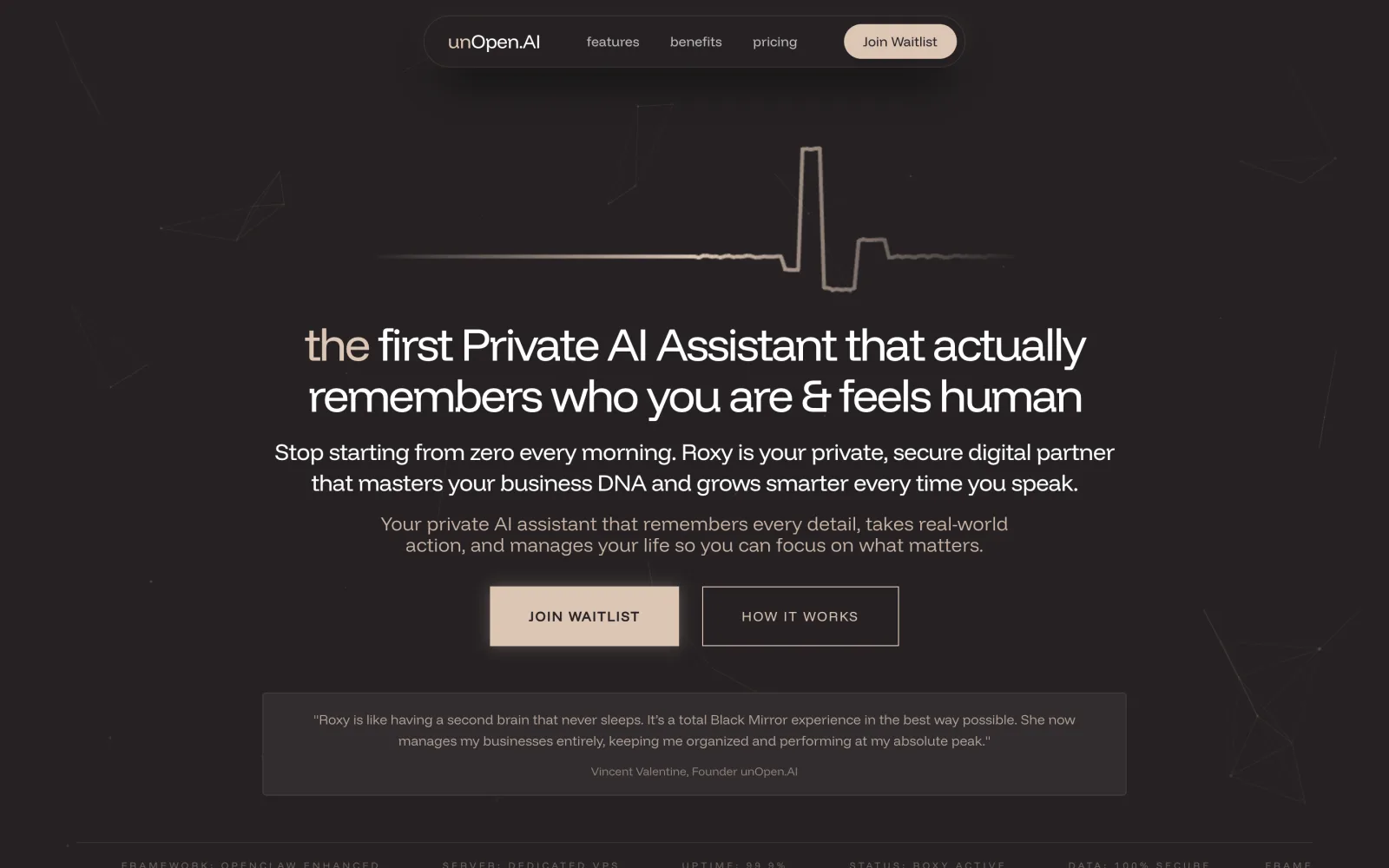
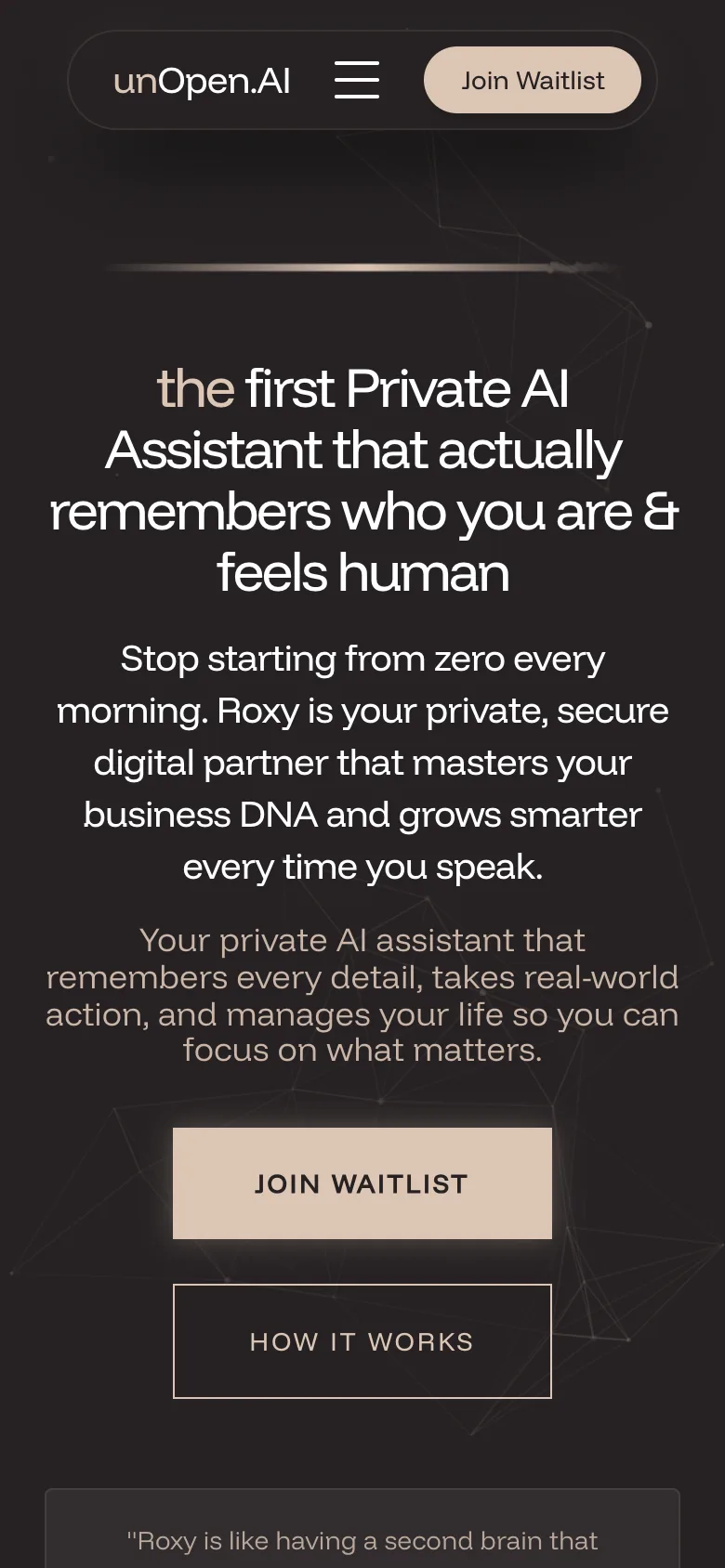
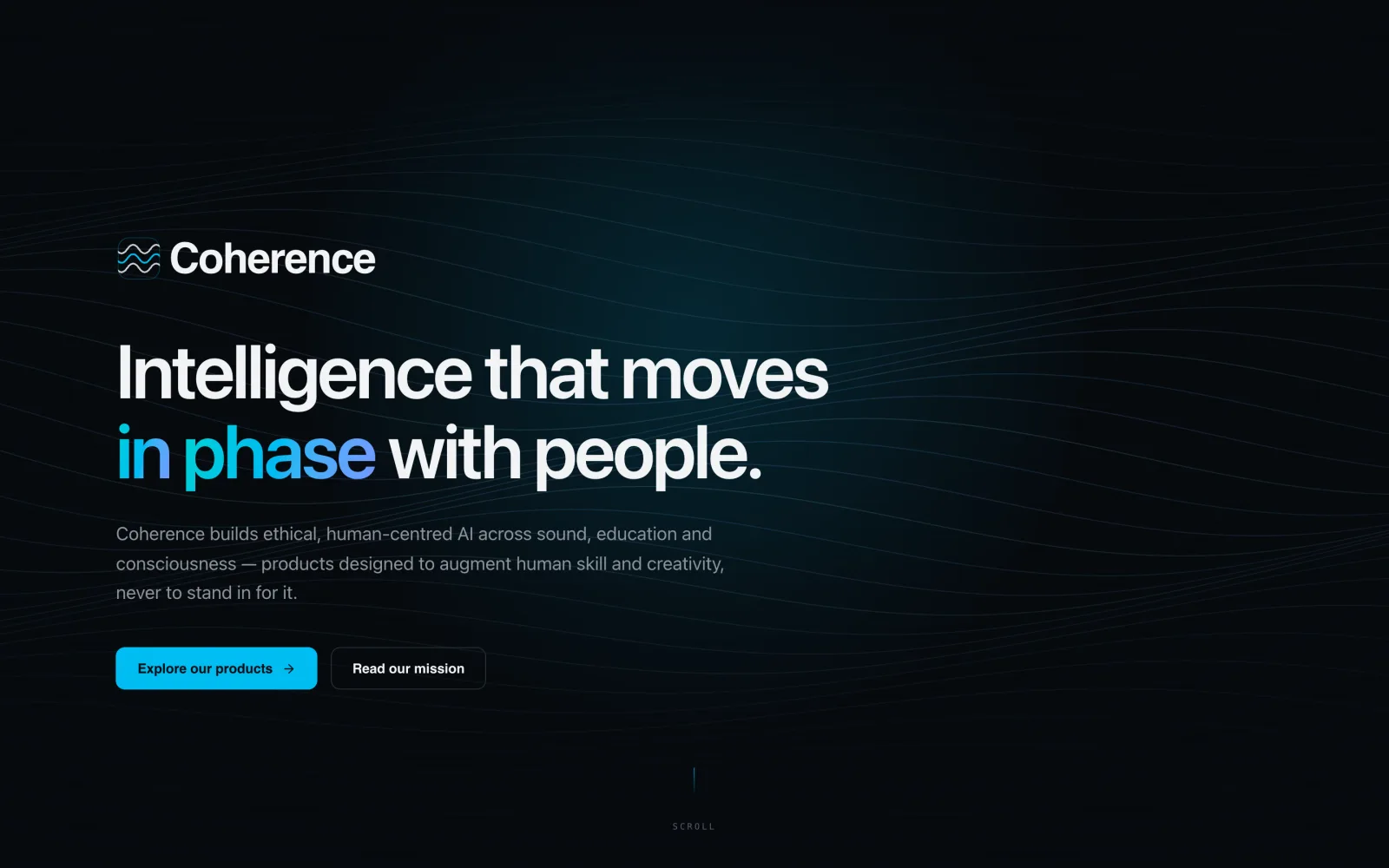
CASE STUDIES

Shipped work.
Go and check it.

The work we can name, with the live site, our scope and the boundary made explicit. Select a project to see the evidence; each is a full case study, not a logo or a claim.

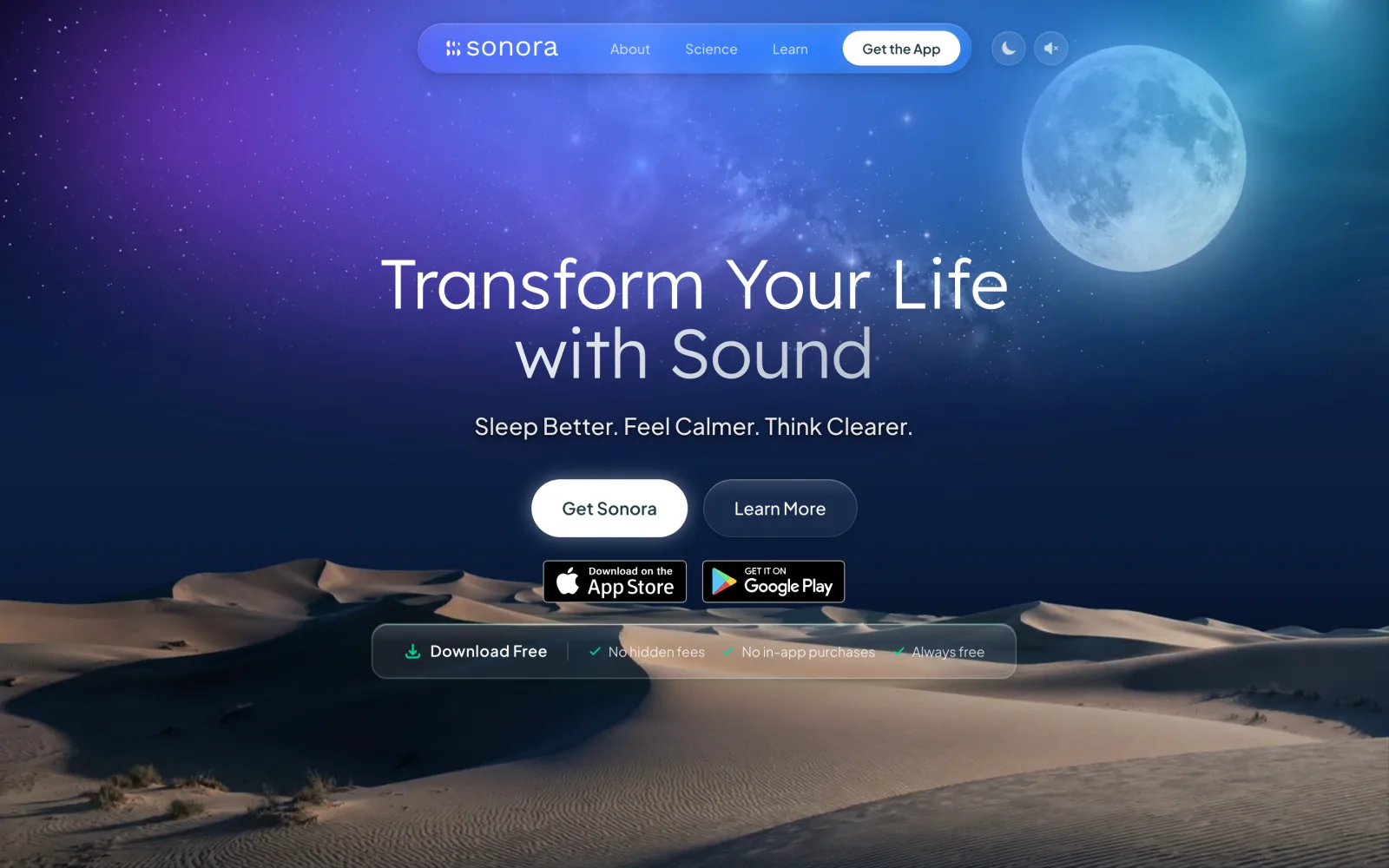
sonora.com
The Sonora homepage on desktop: a full-bleed dune landscape behind the headline “Transform Your Life with Sound”, with App Store and Google Play download buttons.
sonora.com — homepage, 1440×900 sonora.com →
Live Consumer wellness · Mobile + web

Sonora

Cognitive AI Ltd · 2026

A free sound-wellness app, described by its publisher as AI sound therapy that reads a short vocal sample at the start of a session and generates a soundscape for that moment. We designed and built the website and its backend, produced assets for the iOS and Android apps, and supported the application prototype.

Read the case study →

See every published project →

WHO WE HAVE BUILT FOR

Twenty-one years of applications, platforms and campaigns for names you know.

See all of our work →