
















Dark theme
WELCOME TO QQUANTUM

Let Qubi show you around.

Choose how you’d like to explore.

Don’t agreeGo to yourOS instead ↗

Both choices allow Google Analytics, so we can see which pages help.

Sound is your choice. Essential cookies keep the site working. Continuing either way also allows Google Analytics (visits and pages viewed).

Read our Terms, Privacy and Cookies.

Change your choices anytime from the footer.

Getting Qubi ready.
AI systems · Barcelona

Intelligence,
with a job to do.

AI agents. Code you own.

Introduction transcript. Client: I’ve got ideas. And a lot of busywork. A little help? Qubi: Hi! I’m Qubi, from QQuantum. We build AI agents and automation. Connected to your business. Client: I’m still in charge? Qubi: Always. Your rules. Client: I like that. Qubi: Custom systems. Code you own. Less busywork. More room for ideas.

  • Model-agnostic
  • Code delivered to your repositories
  • Evaluated against real data
  • A human approves what matters
  • EU data residency by design
  • On-premise or air-gapped when it has to be
  • Read-only tools by default
  • Building software since 2006
Who we have built for

Twenty-one years. Names you know.

Apps, platforms and campaigns for these teams, long before the AI work. Every one is written up on the work page — what we did, and where our part ended.

See all of our work →
  • BBC Good Food logo
  • Charities Aid Foundation logo
  • GAME logo
  • NatWest logo
  • Next logo
  • NSPCC logo
  • Tesco logo
  • Worldpay logo
  • Samsung logo
  • Sony logo
  • Land Rover logo
  • UAP Limited logo
  • Netflix logo
  • Amazon Prime Video logo
  • Mercedes-Benz dealerships logo
  • San Miguel logo
  • Biovene Barcelona logo
  • Seventy7 logo
  • Littlewoods logo
  • Smile logo
  • The Co-operative Bank logo
What we build · 6 service lines · 32 pages

Six disciplines. One system.

Most real systems touch two or three of these. Pick one to see what's inside — or let it cycle.

ARC · 5 pages

AI Architectures

LLM orchestration, retrieval systems, legacy modernisation and secure data pipelines — the structural core of enterprise AI.

Explore AI Architectures →
The stack, bottom to top
AGT · 4 pages

Autonomous Employees

Agents that carry a role end to end — sales, support, analysis and internal operations — and hand the hard cases to a person.

Explore Autonomous Employees →
An agent’s morning · illustrative
AUT · 4 pages

Intelligent Automation

Removing repetitive process work with systems that reason, not just rules that branch — across systems that were never designed to talk.

Explore Intelligent Automation →
One workflow, end to end
MKT · 4 pages

Algorithmic Marketing

Marketing execution at machine scale — programmatic content built on real data, outreach that is not generic, and forecasting from your own history.

Explore Algorithmic Marketing →
One template × your data = many pages
CRE · 6 pages

Creative Design

Interface, brand and product design for AI-native software — and teaching agents to write and design in your voice.

Explore Creative Design →
A system, not a style
PRO · 3 pages

Rapid Prototyping

Working software in weeks — prototypes built to answer a question, not to impress, and proof that survives a technical diligence question.

Explore Rapid Prototyping →
Example plan
How a system is built

Watch one think.

Every system we ship has the same bones. Pick a job, then pick any stage to see what it does — and where it's documented.

Stage 01 · Sources

Your material, permissions intact

Everything the system knows comes from your own documents and systems, ingested with their access rules — nothing it can see that the user couldn’t.

Stage 02 · Retrieval

Find the passage, keep the source

Retrieval pulls the exact passages that answer the question, so every claim can point back to where it came from.

Stage 03 · Agent

A bounded loop with scoped tools

A pinned model, read-only tools by default, a step limit, and retrieved content treated as data — never as instructions.

Stage 04 · Guardrails

It knows when to stop

Policy checks and a confidence threshold agreed in discovery. Below it, the system stops and hands over instead of guessing.

Stage 05 · Tools

Actions through official APIs

Connected through official APIs or MCP, rate-limited, and every action logged and auditable.

Stage 06 · Human

A person decides what matters

The hard cases reach a person with a briefing — and that person can overrule anything the system did.

Trace · every step observedIllustrative
— quality on the evaluation set- - agreed threshold

Cost, latency and quality are traced per step, so drift shows up on a chart before it shows up in a complaint.

Model-agnostic

Every model earns its place.

We don't have a favourite. Tell us what the system has to do, and see which families we'd reach for first. Drawn from our model pages — a starting point, not a benchmark.

It has to
Which model families we would reach for, by requirement
Family Long-running agents & code Very long documents Images & visual docs Runs on your hardware European provenance Many languages Cheapest at volume Fit
Claude
Enterprise coding and long-running agents
Yes No No No No No No —
GPT
Computer use and a million-token window
Yes Yes No No No No No —
Gemini
Long-context and multimodal strengths
No Yes Yes No No No No —
Llama
Self-hosted, on your own hardware
No No No Yes No No No —
Mistral
European open weights, Apache options
No No No Yes Yes No No —
Qwen
Broad sizes, strong multilingual coverage
No No No Yes No Yes No —
DeepSeek
Visual documents, coding, open weights
No No Yes Yes No No Yes —
Small language models
1B–14B: most tasks at a fraction of the cost
No No No Yes No No Yes —
why we'd reach for it not the reason we'd pick it
Your numbers

What would it free up?

Move the sliders to match a process you run today. The estimate is yours, not a promise — it leaves out build and review time, which the ROI guide walks through.

2000
8
40
35
Read the ROI of AI Automation guide →
Hours freed / month
Value / year
Hours on this work today
With an agent taking its share
Cumulative value, month by month

Arithmetic on your inputs only: tasks × minutes × the share an agent handles × your hourly cost. Not a measured client outcome.

An agent we run · in production

Watch the Press Desk work.

It finds the journalists who would actually write about you — staff and freelance, across national, business, broadcast and trade desks — reads what they've published, and writes each one an individual pitch.

  1. Illustrative replay
Press-desk · step 1 of 5Illustrative · not a real client

Reading today's news cycle

  • RELEVANT New EU guidance on AI in lending Business
  • RELEVANT Funding rounds in southern European fintech Trade
  • RELEVANT Open banking adoption stalls Trade
  • SKIP Celebrity product launch Lifestyle
  • SKIP Weekend football results Sport

Shortlisting the desks that would care

  • SHORTLISTED
    Business
  • SHORTLISTED
    Trade
  • SHORTLISTED
    Broadcast
  • NOT A FIT
    National news
  • SHORTLISTED
    Freelance
  • NOT A FIT
    Lifestyle

Reading what they've published

BUSINESS CORRESPONDENT · TRADE DESK · PUBLISHED PRESS CONTACT
RECENT
RECENT
RECENT
Angle found: they cover the topic, and haven't written about this company before.

Writing one pitch — not a template

SUBJECT
A follow-up to your piece last week — with data you didn't have
BODY
You wrote that nobody had measured it yet. Our client has — and the numbers cut against the consensus. Happy to share the dataset under embargo

Waiting for a human

Pitch ready for the trade desk. Nothing is sent until a person on your team approves it. Approve Edit first
GDPR-scoped to published press contacts Multi-tenant, running today
Shipped & in build

Real work. Check it yourself.

What we built, what stage it is at, and a link to the live thing wherever there is one.

The updated yourOS homepage: Roxy’s open ring surrounded by bento cards for calls, voice, translation, building, design, apps and more.
The yourOS homepage on a phone, with its compact navigation, welcome film button and bento cards.
youros.tech — the homepage bento hero
Our own · coming soon

yourOS

yourOS is an operating system with an AI at its heart. You talk to it like a person, out loud or typed. It makes your calls, plans your days and works on your projects with a crew of agents, on your own private server. Our own product, built from the first commit; the waitlist is open.
What we built
  • Operating system
  • Roxy
  • Agent crew
  • Voice calls
  • App store
  • Website
Meet yourOS →
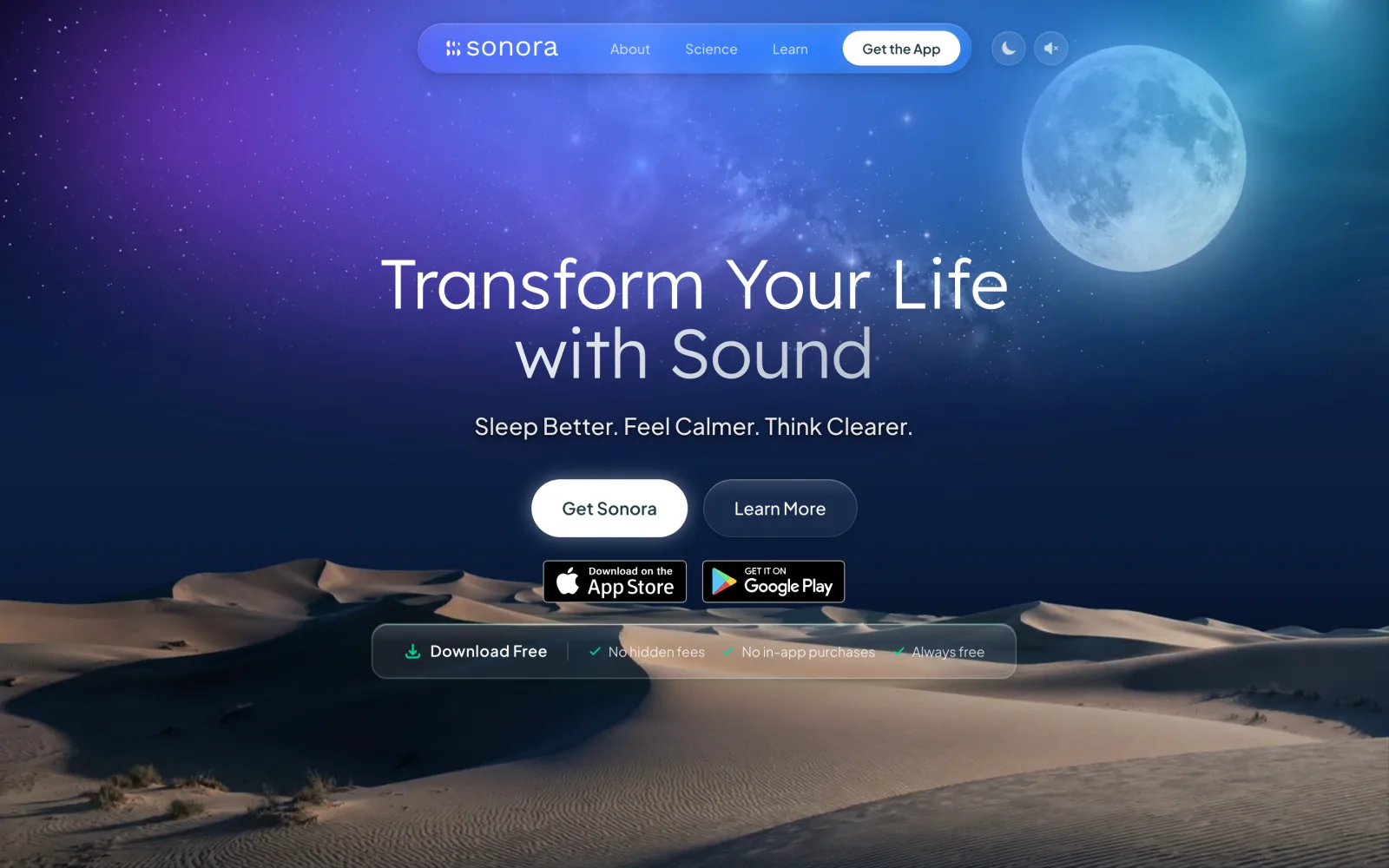
The Sonora homepage on desktop: a full-bleed dune landscape behind the headline “Transform Your Life with Sound”, with App Store and Google Play download buttons.
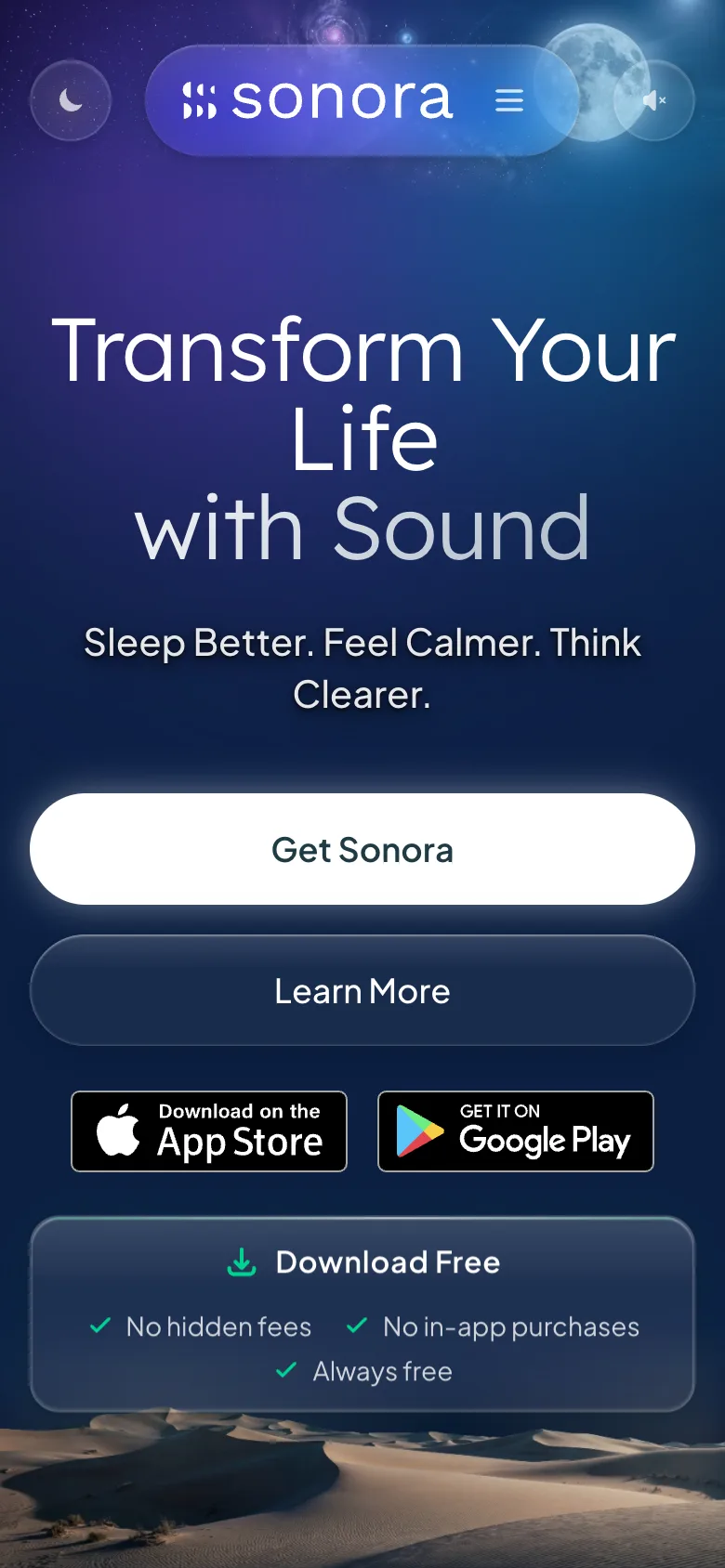
The Sonora homepage on a mobile viewport, showing the same hero reflowed to a single column.
sonora.com — homepage, 1440×900
Live · iOS · Android

Sonora

Website, backend and app assets for Sonora, a free AI sound-therapy app on iOS and Android published by Cognitive AI.

What we built
  • Website
  • Backend
  • App assets
Read the case study →
The updated Podswap homepage on desktop: “Grow on Instagram and TikTok for free, with real engagement from creators your size”, beside a tilted wall of exchange, tool and guide cards on a violet gradient.
The updated Podswap homepage on a phone, with its floating navigation, Instagram and TikTok engagement headline and tilted tool cards.
podswap.app — homepage, 1440×900
Five platforms

Podswap

Brand, website, prototype, apps on five platforms, the AI backend and the algorithm-intelligence pipeline for Podswap, a social growth engine that runs without a human in the loop.

What we built
  • Brand
  • Website
  • Prototype
  • Apps on five platforms
  • AI backend
  • Algorithm pipeline
Read the case study →
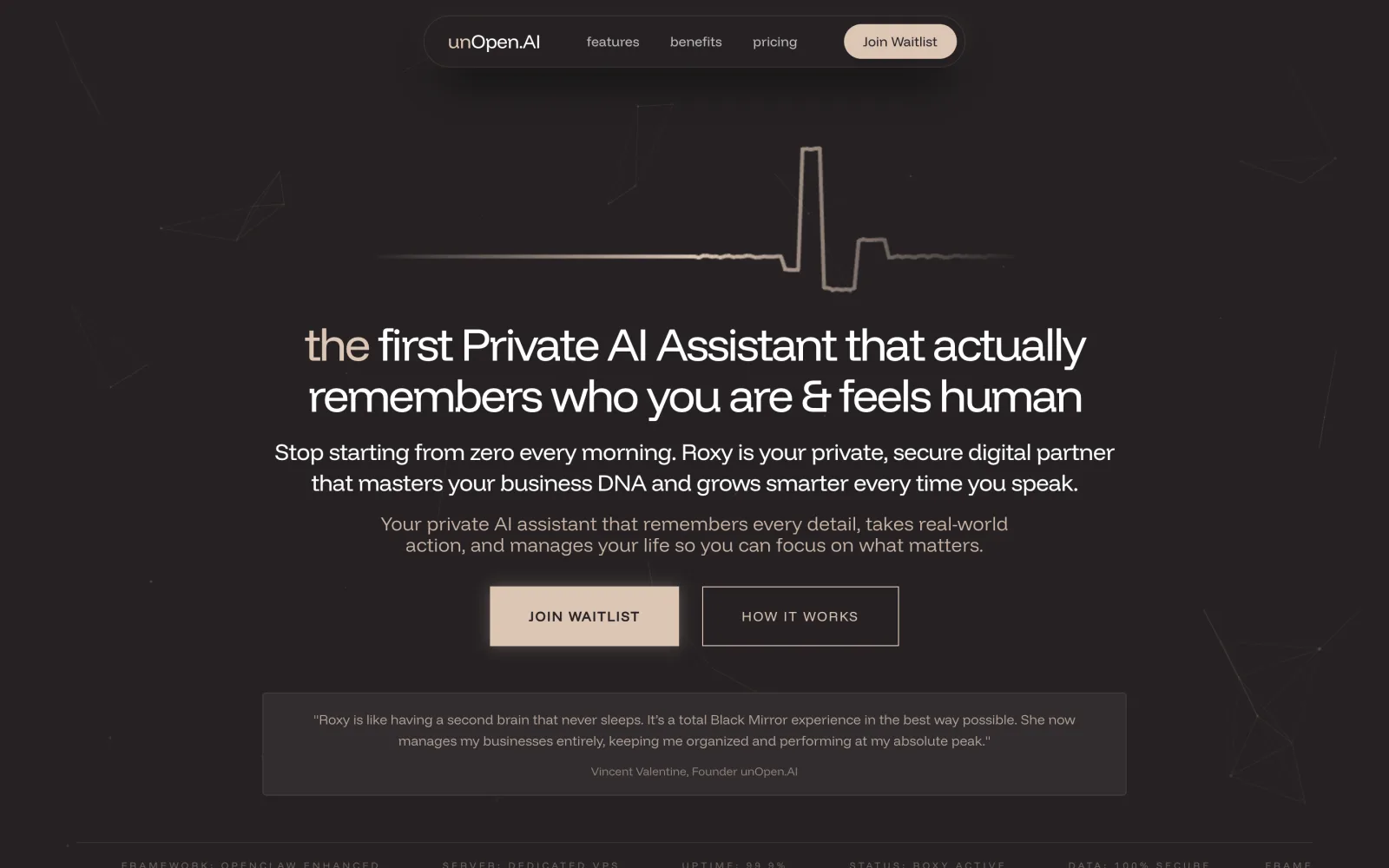
The unOpen.AI homepage introducing Roxy, a private AI assistant that remembers who you are.
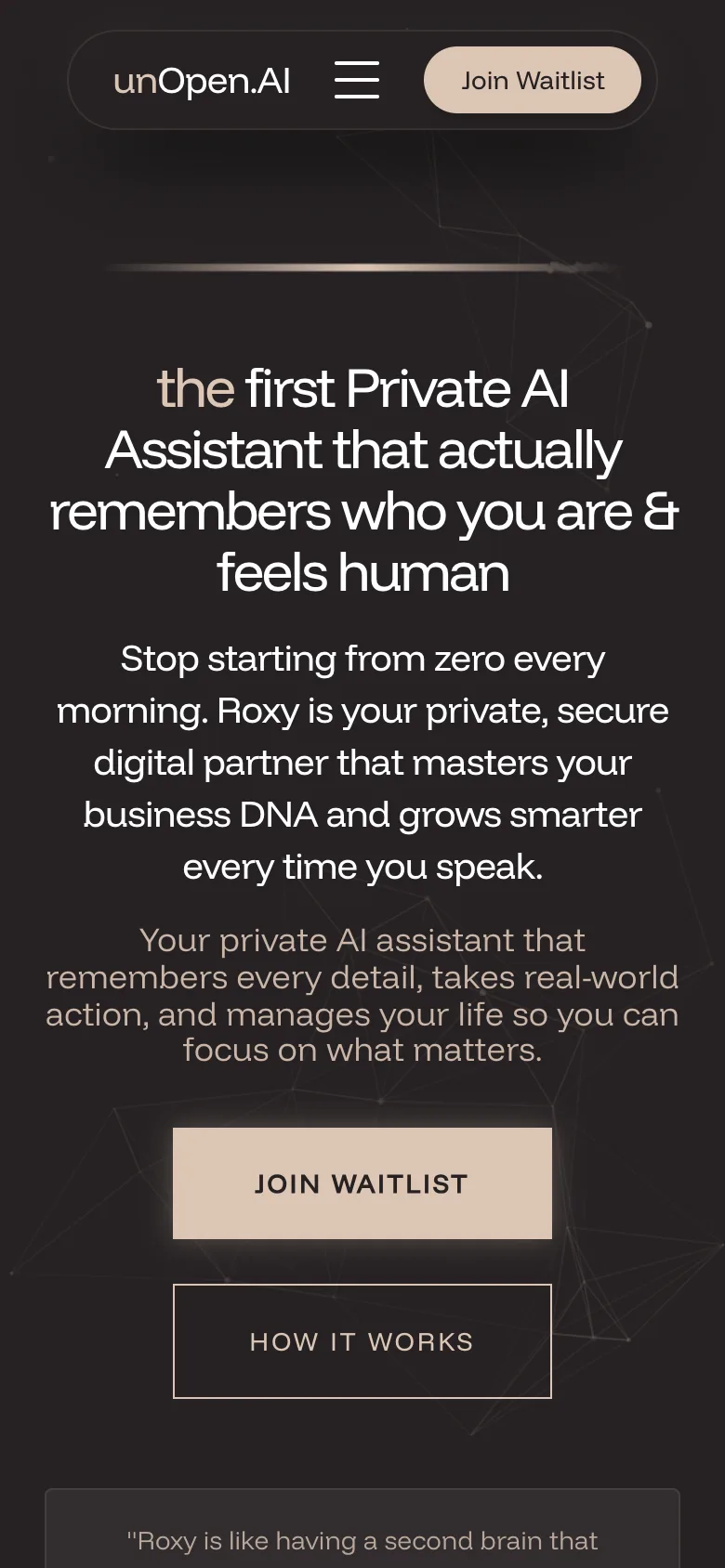
The unOpen.AI homepage on a mobile viewport.
unopen.ai — homepage, 1440×900
Prototype · closed beta

unOpen.AI

In closed beta: Roxy, a private AI assistant with permanent memory running on infrastructure the user owns. Brand, site, product, backend and conversational design.

What we built
  • Brand
  • Site
  • Product
  • Backend
  • Conversational design
Read the case study →
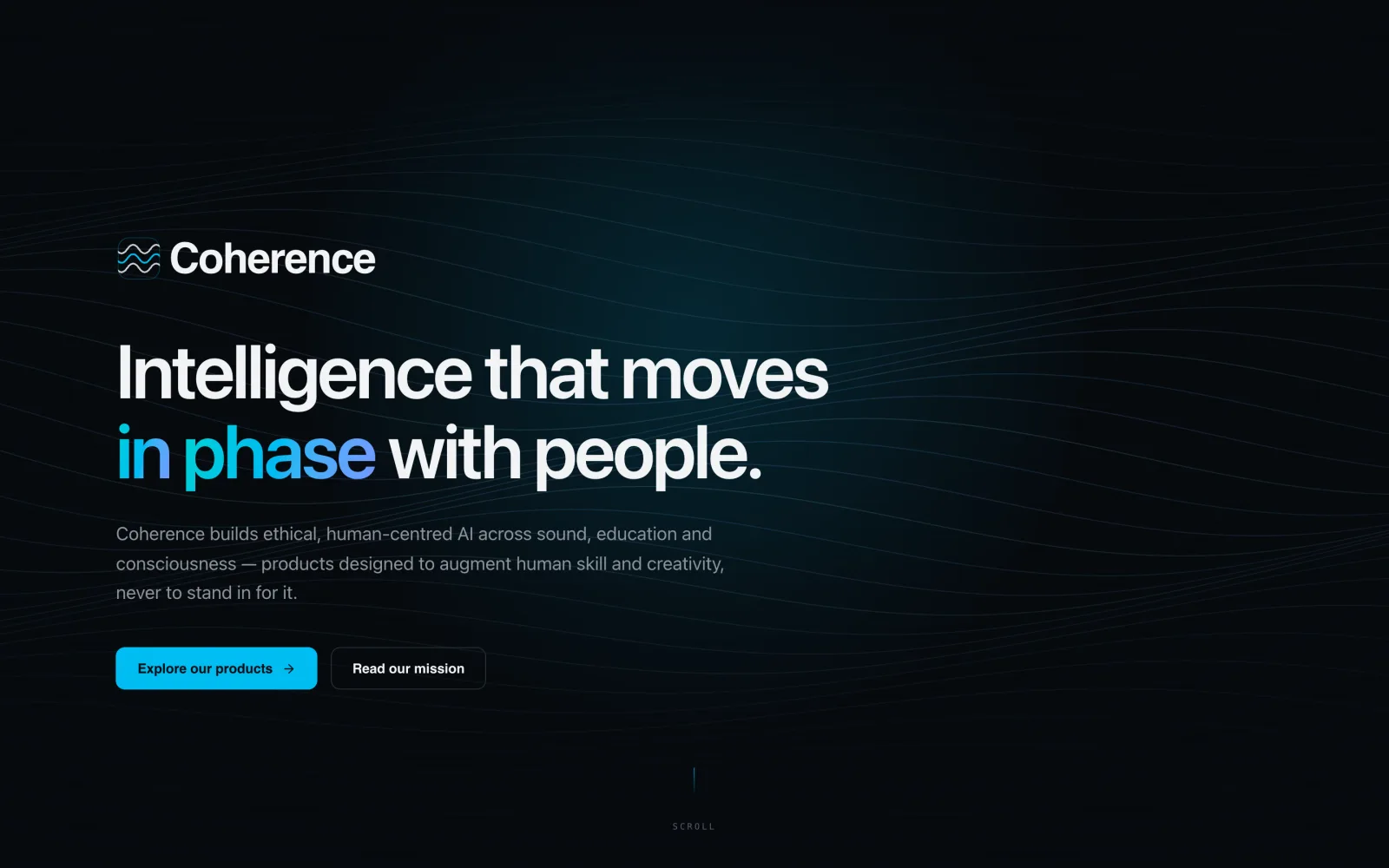
coherence.com on desktop, headed "Intelligence that moves in phase with people".
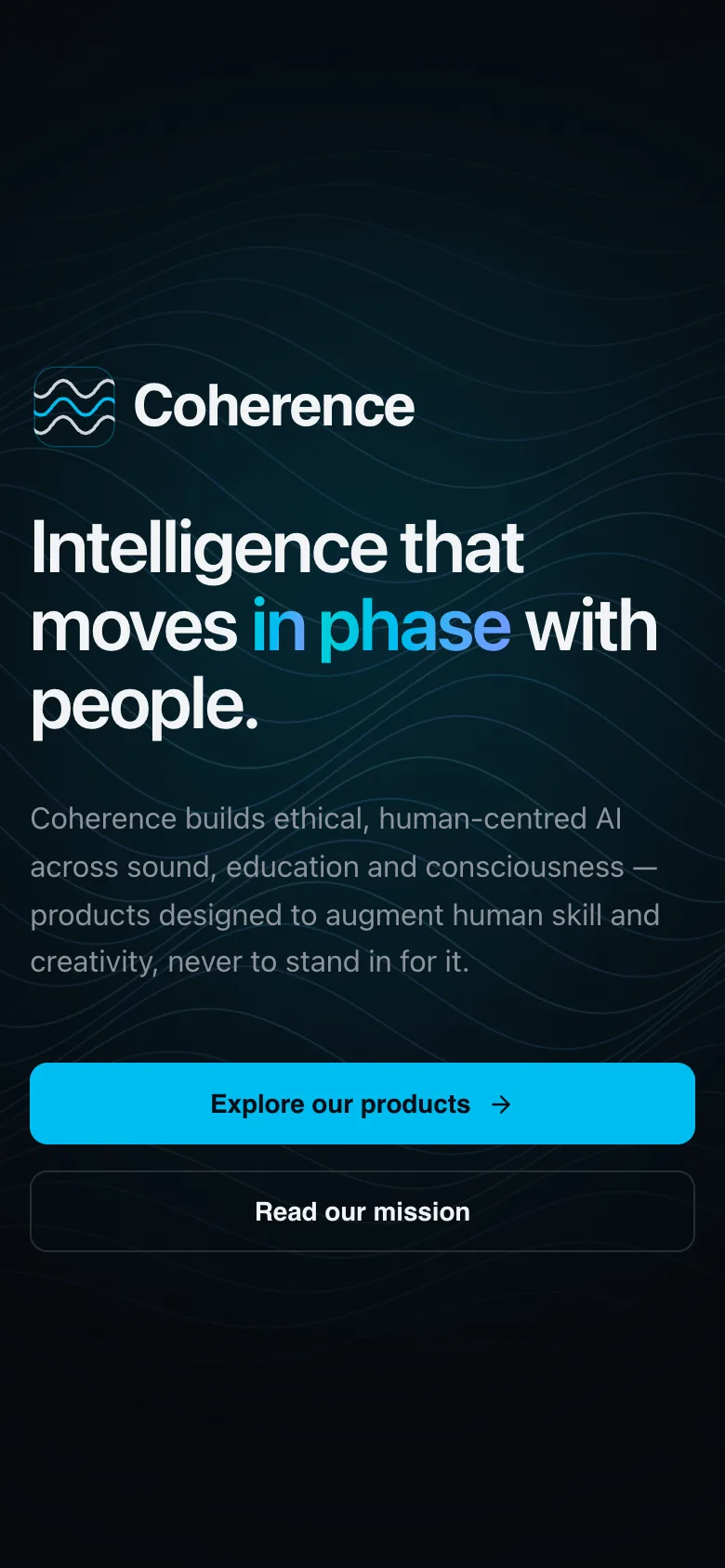
coherence.com on a mobile viewport, reflowed to a single column.
coherence.com — homepage, 1440×900
Live

Coherence

Live at coherence.com: brand identity generated with AI agents we directed, the motion system and website for the group behind Sonora, AboutAI, WakeUp and MudShadows. Agent work remains in build.

What we built
  • Brand identity
  • Motion system
  • Live website
  • Agent work — in build
Read the case study →
The new Domain Booth homepage on desktop: the headline “Premium Domains. Serious Buyers. Proven Results.” beside the animated DB monogram.
The new Domain Booth homepage on a phone, reflowed to a single column.
Our build of the Domain Booth homepage — 1440×900
Live

Domain Booth

Live at domainbooth.com for DomainBooth, a premium domain brokerage: a new animated mark, every page redesigned and rebuilt with designed mobile layouts, and a custom CMS for its sales record, featured names, press and enquiries.

What we built
  • Animated mark
  • Every page redesigned
  • Designed mobile layouts
  • Custom CMS
Read the case study →
Where it's used

Built for regulated, complicated work.

9 industries where a wrong answer has a cost. Pick one to see the problems we're asked to solve there.

Industry overview

Insurance

Claims triage, underwriting support and fraud detection, designed for a regulated decision that a person still signs.

Explore Insurance →
One page covers this industry today — the overview. Use cases follow as we publish them.
Industry overview

Public Sector

AI for public bodies: procurement reality, data sovereignty, transparency duties and the records an audit will ask for.

Explore Public Sector →
One page covers this industry today — the overview. Use cases follow as we publish them.
Industry overview

Logistics & Freight

Document pipelines, exception handling and planning support for freight, ports and supply chains.

Explore Logistics & Freight →
One page covers this industry today — the overview. Use cases follow as we publish them.
How we work

Discovery, build, production — then it's yours.

No pilot purgatory. Each phase ends with something you can check, and the quality bar is written down before the first line of production code.

agent = Agent(
    model=MODEL_PINNED,     # upgraded deliberately, behind an eval gate
    tools=[
        search_docs,        # read-only
        fetch_account,      # read-only, scoped to the caller
        create_ticket,      # write, rate-limited
    ],
    # Retrieved content is data, never instructions.
    untrusted_sources=[DOCS, TICKETS],
    max_steps=8,            # bounded - no runaway loops
)
Agents are defined as code with explicit, scoped tools. Read-only by default; anything destructive is either absent or gated behind confirmation.
- name: Evaluation suite
  run: |
    uv run evals/run.py \
      --set golden \
      --baseline main \
      --fail-under 0.92

# Retrieval is measured separately. A generation score that
# drops because retrieval regressed is a misleading signal.
- name: Retrieval recall
  run: uv run evals/run.py --set retrieval --fail-under 0.88
Quality is a merge gate, not an opinion. A pull request that drops the score on the golden set does not land. Thresholds are illustrative; yours are agreed in discovery.
Trust & infrastructure

Where should it run?

Answer three questions and the table picks the deployment we'd start from. Every option is one we build.

Can the data leave your network?
Do you need frontier proprietary models?
Must it run with no internet at all?
Deployment options compared
Where the model runs The provider’s infrastructure Your cloud account, in a region you choose Hardware you own, or rent in a data centre An isolated network
Data leaves your network Yes — to the provider, under a DPA It stays in your cloud tenancy No Never — no outbound connection at all
Models available Frontier proprietary and hosted open models Open-weight, plus models your cloud provider offers Open-weight models Open-weight models, updated deliberately
Who operates it The provider runs the model; we build the system You, with us You, with us — or we run it You, with our runbooks
Best when Speed to value matters and the data allows it Data must stay in your tenancy and region Regulation or sovereignty rules out the cloud Nothing may touch the internet
Deployment Options Compared → Data Residency & Sovereignty → On-Premise AI → Air-Gapped Deployment →
Decisions we help with

The honest side-by-sides.

The questions teams argue about before they build. Flip a card for the short answer — the page has the long one.

  • When to retrieve, when to fine-tune, and why the answer is usually retrieval first.

  • When an off-the-shelf AI product is the right call and when it structurally cannot be.

  • The real cost and time comparison between hiring an AI team and engaging one.

  • Comparing the two on the axes that decide an enterprise deployment.

  • Where Zapier, Make and n8n stop being enough, and what replaces them.

  • The difference that matters: an agent takes actions and can be wrong in ways a chatbot cannot.

  • Where your models run, compared on cost, control, latency and the effort nobody budgets for.

  • The capability gap, the cost inversion and the licence terms that decide this more often than benchmarks do.

Where we work

Barcelona.
And across Europe.

The studio is in Barcelona. The work reaches 24 cities — hover one to see it, click to read how we work there.

Spain
Barcelona
The studio
Read the Barcelona page →
Spain
Madrid
505 km from the studio
Read the Madrid page →
Spain
Valencia
304 km from the studio
Read the Valencia page →
Portugal
Lisbon
1,006 km from the studio
Read the Lisbon page →
United Kingdom
London
1,139 km from the studio
Read the London page →
United Kingdom
Manchester
1,384 km from the studio
Read the Manchester page →
United Kingdom
Birmingham
1,272 km from the studio
Read the Birmingham page →
United Kingdom
Edinburgh
1,665 km from the studio
Read the Edinburgh page →
Ireland
Dublin
1,471 km from the studio
Read the Dublin page →
France
Paris
831 km from the studio
Read the Paris page →
France
Lyon
531 km from the studio
Read the Lyon page →
Netherlands
Amsterdam
1,238 km from the studio
Read the Amsterdam page →
Belgium
Brussels
1,065 km from the studio
Read the Brussels page →
Germany
Berlin
1,499 km from the studio
Read the Berlin page →
Germany
Munich
1,055 km from the studio
Read the Munich page →
Germany
Frankfurt
1,092 km from the studio
Read the Frankfurt page →
Germany
Hamburg
1,472 km from the studio
Read the Hamburg page →
Switzerland
Zurich
835 km from the studio
Read the Zurich page →
Austria
Vienna
1,350 km from the studio
Read the Vienna page →
Italy
Milan
725 km from the studio
Read the Milan page →
Italy
Rome
860 km from the studio
Read the Rome page →
Sweden
Stockholm
2,278 km from the studio
Read the Stockholm page →
Denmark
Copenhagen
1,759 km from the studio
Read the Copenhagen page →
Poland
Warsaw
1,863 km from the studio
Read the Warsaw page →
Building software since
2006
Based in
Barcelona
Model stance
Agnostic
Code ownership
Yours

Facts about how we work, not measured client outcomes.

Questions

What people ask before they call.

Which models do you use?

Whichever fits the workload. We are model-agnostic and route across Claude, GPT, Gemini, open-weight models and our own Jev — chosen per task against an evaluation set, not by habit.

Who owns the code?

You do. Everything is built in, and delivered to, your repositories, with runbooks and a documented handover so your team can own it.

Can it run on our own hardware?

Yes — on-premise, in a private data centre, or fully air-gapped. The table above shows where we would start.

Will it make things up?

No system can promise it never gets something wrong. We ground answers in your sources with citations, measure quality against real data before and after launch, and set guardrails that stop and escalate rather than guess.

What happens on the first call?

Thirty minutes, no deck. You describe the problem; we tell you whether it is one worth engineering — and if it is not, we say so.

Hire your first
AI employee.

Tell us the job you would hand over if you trusted a machine with it. In one 30-minute call we will tell you whether it should, what it would take — and if it should not, we will say so.

30-minute technical call · no deck