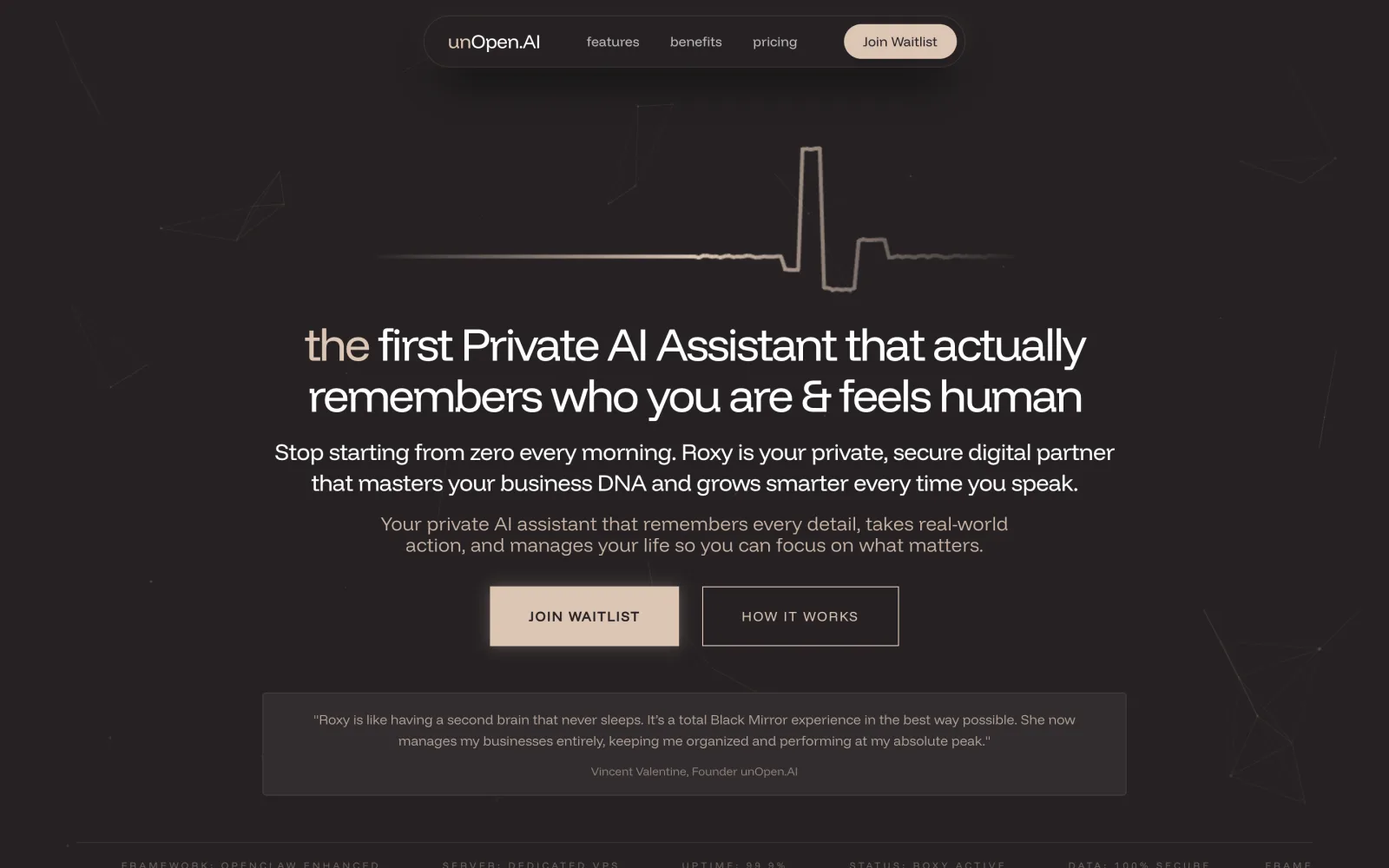
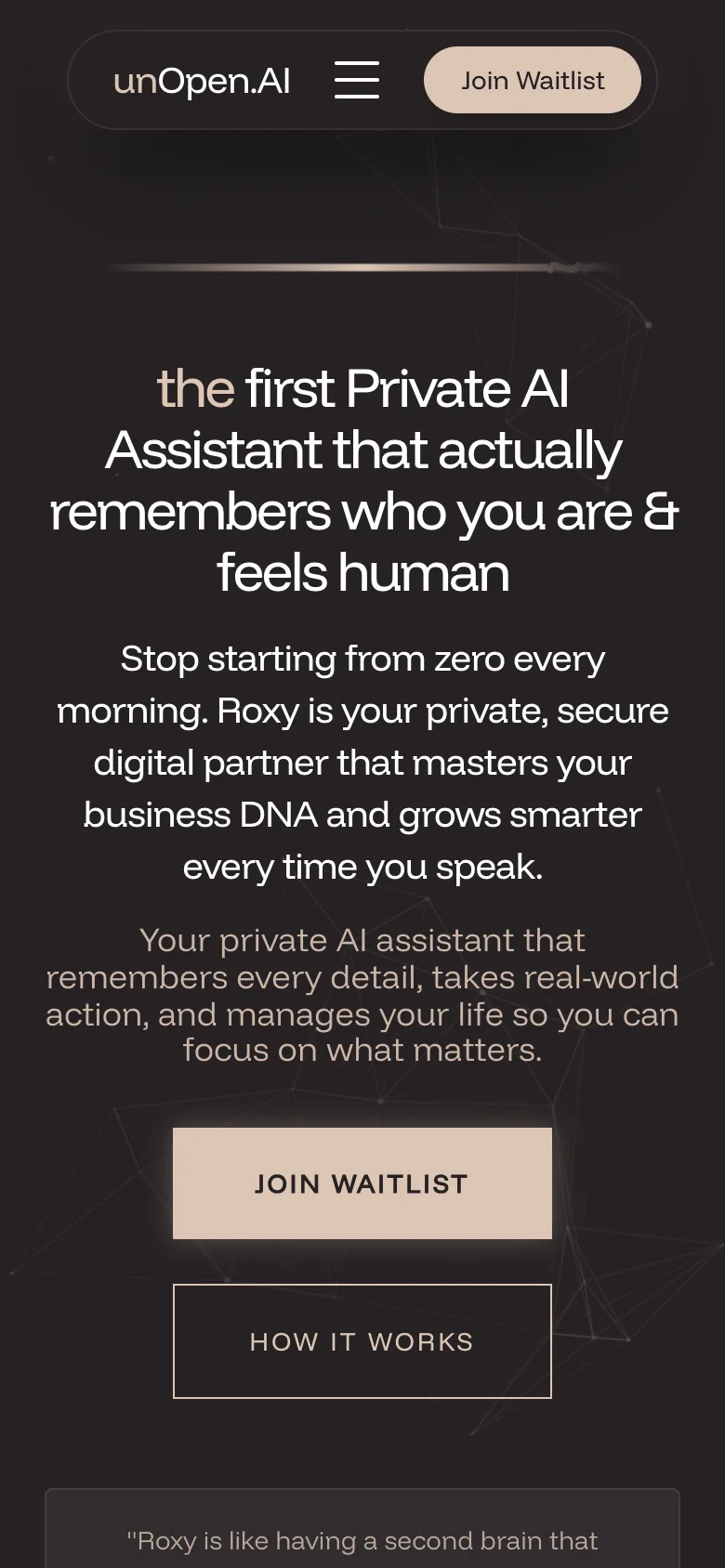
Prototype · closed beta
unOpen.AI
In closed beta: Roxy, a private AI assistant with permanent memory running on infrastructure the user owns. Brand, site, product, backend and conversational design.
An LLM router decides which model should answer each request, so a short classification is not billed like a difficult analysis. QQuantum.ai is building one that assesses the work before choosing: Jev supplies fast judgements about difficulty and context, and the routing policy balances quality, cost and capacity. It is for teams with mixed AI workloads; no production savings are claimed yet.
In development · No production savings claimed
Introduction transcript. Qubi: Simple requests and difficult ones often pay the same expensive model price. We assess each request first, and check which models it is allowed to use. Routine work takes the low-cost route; when a check fails, it escalates. Then we count the full cost of every route, retries included, against quality.
A short classification and a difficult technical analysis should not automatically receive the same model budget. Our router design separates the decision about what a request needs from the model that ultimately answers it.
Jev can assess task category, whether the request needs extended reasoning, and whether the available context appears sufficient. Your application then checks the allowed providers, token budget, current quota and latency requirements. This is an application design informed by TypeSafe’s intent-routing pattern.
The router estimates requirements from the request and observable context. It does not inspect a model’s private thinking. Straightforward work can take a lower-cost route; uncertain or demanding requests can escalate to a stronger model or human review.
task + relevant context
privacy + capacity
complexity + confidence
cheapest eligible route
accept or escalate
A cheap routing call is useful only if the complete system costs less at the required quality. Compare total spend per accepted answer: the router, selected generator, verification, retries and escalations. Include duplicated input when more than one model sees the request.
For an illustrative routing request with 2,000 input tokens, the published Jev input price gives $0.000084 per assessment, or $8.40 for 100,000 assessments. Calculation: 2,000 × 100,000 ÷ 1,000,000 × $0.042. This excludes downstream model calls, retries, hosting, tax and engineering. It is arithmetic, not a measured saving. Price checked 18 September 2026.
Reducing expensive calls may preserve a provider’s available capacity. It cannot increase your contracted limits or bypass rate limiting. A router needs per-provider budgets, backoff and an explicit unavailable state.
TypeSafe demonstrates the second pattern in its structured extraction cascade. That example is not a benchmark of our router.
Start with a labelled set of real requests and the current system as a baseline. Run the proposed router in shadow mode: record what it would choose without changing the user’s answer. Compare success rate, escalation rate, total API spend and response-time percentiles by task category.
Use a separate holdout set to tune and then test the confidence gates. A confident decision can still be wrong, and a score is not an account permission. Pin the evaluated version and replay the holdout set when it changes. TypeSafe’s confidence documentation explains the distinction between the distribution and its confidence summary.
For a tiny workload or a task already handled well by one inexpensive model, the extra gate may add cost and latency. Our hybrid routing guide covers the broader deployment choices.
That depends on the workload, selected models and escalation rate. We have not published production savings for our router. A pilot compares total cost per accepted answer with the existing system.
No. It can reduce unnecessary calls to constrained models, but every provider’s limits still apply. Capacity checks, budgets and backoff belong in the application.
The policy chooses a tested fallback, requests clarification or sends the case for review. Timeout and provider errors also need explicit paths.
What we built, what stage it is at, and a link to the live thing wherever there is one.
In closed beta: Roxy, a private AI assistant with permanent memory running on infrastructure the user owns. Brand, site, product, backend and conversational design.


yourOS is an operating system with an AI at its heart. You talk to it like a person, out loud or typed. It makes your calls, plans your days and works on your projects with a crew of agents, on your own private server. Our own product, built from the first commit; the waitlist is open.
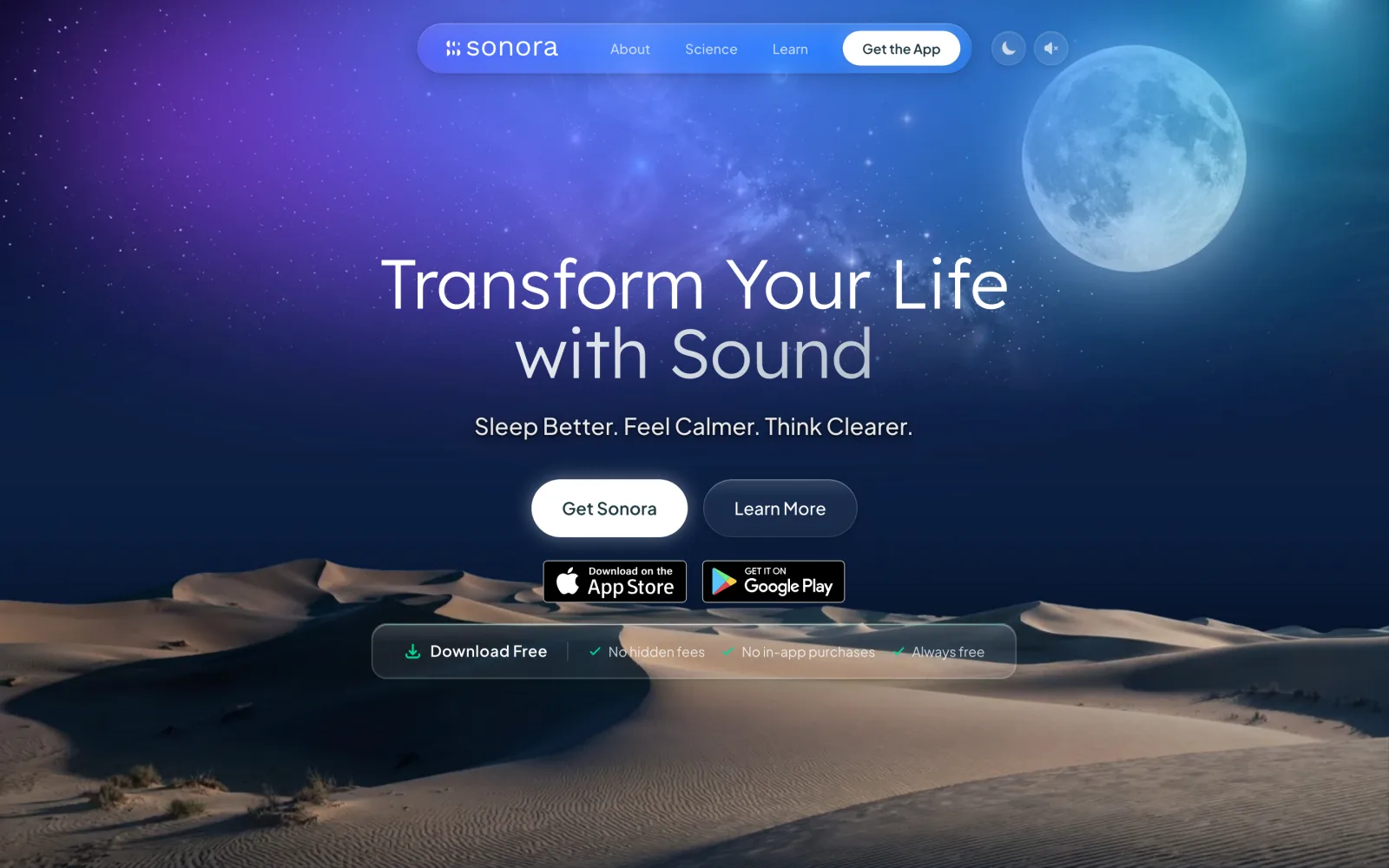

Website, backend and app assets for Sonora, a free AI sound-therapy app on iOS and Android published by Cognitive AI.


Brand, website, prototype, apps on five platforms, the AI backend and the algorithm-intelligence pipeline for Podswap, a social growth engine that runs without a human in the loop.


Live at coherence.com: brand identity generated with AI agents we directed, the motion system and website for the group behind Sonora, AboutAI, WakeUp and MudShadows. Agent work remains in build.


Live at domainbooth.com for DomainBooth, a premium domain brokerage: a new animated mark, every page redesigned and rebuilt with designed mobile layouts, and a custom CMS for its sales record, featured names, press and enquiries.





















Bring your request mix and current API spend. We will define a router pilot with an explicit quality floor and a complete cost baseline.